



What Families Should Know About Bills After a Death

When someone in your family passes away, everyday responsibilities do not stop immediately. Bills may continue arriving, creditors may send letters, and statements may still appear in the mail or online. For many families, one of the first questions is simple but stressful: who pays debts after death?
Understanding Handling Bills During Probate can help a family avoid costly mistakes. In Georgia, the estate generally handles the deceased person’s valid debts and expenses through the probate process. The personal representative, such as an executor or administrator, is responsible for managing the estate. Georgia Courts explains that probate courts have jurisdiction over the probate of wills and administration of estates, while Georgia guidance explains that the personal representative has responsibility for administering the estate and paying estate debts.
The most important rule for families is this: do not assume that you must use your own money to pay the deceased person’s bills. A family member may have personal responsibility for a particular debt if they were a joint account holder, co-signer, or otherwise legally responsible for it. However, being a child, spouse, sibling, or other relative does not automatically make someone responsible for every debt left behind.
This guide explains Handling Bills During Probate in plain language, including what to pay, what not to pay, how to organize paperwork, and how to communicate with creditors.
What Happens to Bills When Someone Dies?
The death of a person does not automatically make every bill disappear. Instead, many debts become obligations that the estate may need to address.
The estate is the collection of money, property, accounts, and other assets belonging to the deceased person that are subject to administration. Valid debts may be paid from estate assets rather than from a family member’s personal bank account.
Georgia law provides rules for claims against an estate and establishes protections and procedures for the personal representative. For example, Georgia law generally does not require the personal representative to pay estate debts, in whole or in part, until six months after the first personal representative qualifies.
That does not mean families should simply ignore every bill for six months. Instead, the safer approach is to collect the bills, identify the creditor, determine what the debt relates to, preserve the paperwork, and allow the personal representative to handle the claim according to the estate’s circumstances and applicable law.
Do Not Panic When the Bills Arrive

A stack of envelopes can make a grieving family feel as though everything needs to be paid immediately. That feeling is understandable. However, paying bills too quickly can create problems if you use the wrong account or pay one creditor before determining the estate’s obligations.
Before writing a check, ask:
- Is this bill actually owed by the deceased person?
- Is the account solely in the deceased person’s name?
- Is another family member a joint account holder or co-signer?
- Does the bill relate to the estate?
- Has the personal representative been officially appointed?
- Is the payment supposed to come from an estate account rather than a personal account?
This simple pause can protect the family from unnecessary financial confusion.
If your family has just received a large number of bills, start by gathering and organizing them rather than immediately paying everything. If the estate is complicated, consider speaking with a Georgia probate attorney before making significant payments.
Read our blog What is Georgia Estate Settlement. Learn about managing a deceased person’s property, financial assets, and personal belongings. Why keeping a record of estate inventory matters.
Handling Bills During Probate the Right Way
Handling Bills During Probate becomes much easier when the family separates two questions: What does the deceased person owe? and Who is legally responsible for paying it?
Those questions are not always the same.
For example, a credit card may have been used only by the deceased person. The balance may therefore be an estate debt. However, if another person was a joint account holder or co-signer, that person’s own legal responsibility may be different.
Georgia’s Department of Aging Services has advised families to notify creditors of the death and cautions people not to agree to become personally responsible for outstanding balances simply because a creditor asks them to do so.
Should Bills Be Paid or Left Unpaid?
The answer depends on the type of bill and the circumstances of the estate.
A useful way to think about paying bills after death is to avoid both extremes. Families should not blindly pay every bill, but they also should not ignore every bill.
Instead, organize each bill and determine how it should be handled.
| Type of bill | General approach | Why it matters |
|---|---|---|
| Credit card in deceased person's name | Record and review as an estate debt | It may be a claim against the estate |
| Medical bill | Preserve and review | The estate may be responsible for valid medical debt |
| Mortgage | Address promptly | The home may secure the debt |
| Auto loan | Review promptly | The vehicle may secure the loan |
| Utility bill | Determine whether service is still needed | Someone living in the home may need continued service |
| Personal loan | Record and review | It may be an estate obligation |
| Bill jointly held with another person | Review carefully | The other account holder may have personal responsibility |
| Unknown bill or collection letter | Do not automatically pay | The claim may require verification |
The table is a starting point, not a substitute for reviewing the actual account documents. Secured debts, joint accounts, contracts, and estate-specific circumstances can change the answer.
Should You Use Personal Money to Pay the Bills?
Usually, a family member should not simply use personal money to pay the deceased person’s debts just because the family member wants to keep everything current.
The distinction between personal money and estate money is extremely important.
If you are the executor or administrator, estate expenses should generally be handled as estate expenses, with appropriate records maintained. Georgia law provides that necessary expenses of administration are paid from estate funds, and Georgia law also establishes rules governing debts and claims against an estate.
If you personally pay an estate expense because there was no estate account available yet, keep a detailed record and receipts and ask the probate attorney or other appropriate professional how the expense should be documented and reimbursed.
Do not assume that every amount you personally spend will automatically be reimbursed.
What About a Mortgage or Car Payment?
A mortgage or vehicle loan deserves special attention because the debt may be connected to property.
A credit card is generally different from a mortgage secured by a house. With a secured debt, the creditor may have rights connected to the property securing the loan.
Therefore, if the family wants to keep a house or vehicle, do not ignore notices simply because probate is open.
Instead:
- Keep every mortgage or vehicle-loan statement.
- Record the account number.
- Identify whose name appears on the account.
- Determine whether another person is a borrower or co-borrower.
- Tell the personal representative about the account.
- Get professional advice before deciding to stop payments.
Georgia’s consumer protection guidance also encourages people dealing with financial problems to contact creditors early rather than simply allowing debts to grow without communication.
If you are unsure whether a bill is an estate debt, a joint debt, or a secured debt, place the bill in your estate file and get clarification before paying it from personal funds.
Read our blog How Estate Debts and Expenses are Handled when bills arise and may require attention depending on the circumstances at hand.
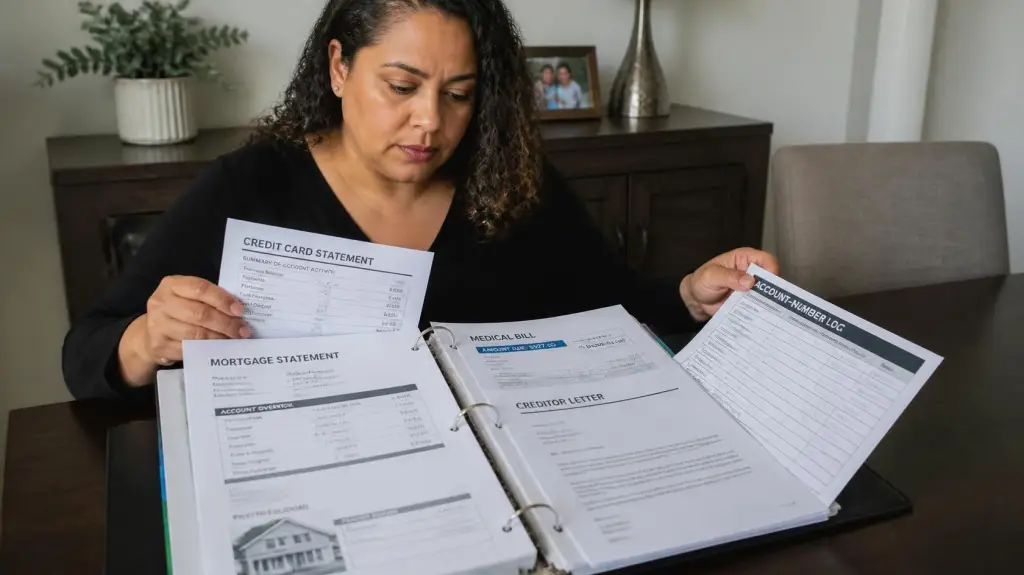
Build a Simple Estate Bill System

Families often feel more confident once every document has a place.
The goal is not to create a complicated filing system. The goal is to make it easy to answer four questions:
What is the bill? Who sent it? How much is owed? What happened to it?
A simple estate bill system can use five categories.
1. Bills
Keep the actual bills together. Include medical bills, credit card bills, utility bills, loan statements, insurance notices, property-related expenses, and other financial demands.
Write down the date each bill was received.
Why does this matter? Because several bills may arrive for the same account, and a family member needs to know which document is the newest statement.
2. Statements
Statements can provide important information that a single bill does not show.
Keep statements for bank accounts, credit cards, mortgages, loans, investment accounts, insurance, and other financial accounts.
Statements may help establish the account history and balance. They can also help the personal representative identify accounts that the family did not know existed.
3. Account Numbers
Account numbers are extremely useful during Handling Bills During Probate.
Create a simple account list with:
- Creditor or company name
- Account number
- Type of account
- Name on the account
- Current balance
- Date of the latest statement
- Contact information
- Status of the account
- Notes about communication
Keep this information securely because account numbers are sensitive financial information.
4. Notices
Notices should be saved even if they appear routine.
A notice may involve:
- Payment demands
- Collection activity
- Insurance
- Mortgage information
- Tax matters
- Court information
- Account closure
- Changes to an account
- Deadlines
- Requests for documentation
Do not throw away a notice because it looks like junk mail.
5. Letters From Creditors
Keep every letter from a creditor or collection agency.
Make a note of:
- The date received
- The company sending the letter
- The account number
- The amount claimed
- The deadline listed
- Whether supporting documents were included
- Whether anyone responded
- How the response was sent
Georgia’s creditor-claim rules make documentation particularly important. Georgia law provides a process for creditors to notify the personal representative of claims and allows the personal representative to request reasonable additional proof before paying a claim.
Create these five folders today. Even if the estate is small, organized records can make communication with creditors, family members, accountants, and attorneys much easier.
Read our blog Who Needs to Be Notified During Probate about how to send communications to creditors, family members, and other professionals to provide information about the estate. Understanding the importance of sending notice and how it can affect deadlines, creditor claims or beneficiary rights.
A Family Checklist for Handling Bills During Probate
Once the initial shock of a death has passed, families can take practical steps.
Start with the paperwork instead of the checkbook.
Use the following checklist to create an organized record:
- Gather bills received by mail and email.
- Collect recent account statements.
- Record account numbers.
- Separate debts in the deceased person’s name from jointly held accounts.
- Save every creditor letter.
- Keep mortgage and vehicle-loan documents separate and easy to find.
- Record bills related to the final illness.
- Do not sign an agreement accepting personal responsibility for another person’s debt without understanding the legal consequences.
- Do not use personal money simply because a creditor demands immediate payment.
- Keep receipts for any estate-related expense personally paid by a family member.
- Keep copies of letters and emails sent to creditors.
- Record the date and name of every creditor representative contacted.
- Give the personal representative copies of all relevant documents.
- Ask a Georgia probate professional about unusual, disputed, or high-value debts.
This process matters because estate debts can affect what beneficiaries eventually receive. Georgia law provides rules concerning the payment of debts and expenses and the treatment of gifts when estate assets are not sufficient.
What If There Is Not Enough Money in the Estate?
This is one of the most difficult questions families face.
An estate may have a house, car, bank account, or other property but still have more debts than available cash. That does not automatically mean the children or other relatives must personally pay everything.
Georgia law establishes rules for estate debts and priorities. The personal representative should not simply choose creditors based on who calls the most often. The estate’s debts need to be handled according to applicable Georgia law and the circumstances of the estate.
For that reason, families should be especially careful about making large payments or distributing estate property before creditor issues have been properly addressed.
What If a Creditor Calls You?
A creditor may contact the executor or administrator about a debt. Georgia consumer guidance recognizes that debt collectors may communicate with an executor of an estate and also explains protections against deceptive or abusive collection practices.
If you receive a call, stay calm.
You can explain that the person has died and that the matter is being handled through the estate. Keep notes about the call and ask the creditor to provide information in writing when appropriate.
Most importantly, do not make promises you do not understand.
Being polite does not mean accepting personal responsibility.
A Simple Rule Families Can Remember
When someone dies, think “organize first, pay second.”
The first step is to identify the bill. The second is to determine who legally owes it. The third is to determine whether it is an estate expense or a personal obligation of someone else. Only then should the appropriate person decide how the bill should be handled.
This approach can prevent a grieving family from accidentally paying debts from personal funds or distributing estate assets too soon.
Frequently Asked Questions About Handling Bills During Probate
Does a deceased person’s debt disappear?
Not necessarily. Valid debts may become claims against the estate. Whether a particular debt is collectible, how it is paid, and whether anyone else is personally responsible depend on the account, contract, estate assets, and applicable law.
Who pays debts after death in Georgia?
Generally, the estate is responsible for the deceased person’s valid debts that are properly payable from the estate. The personal representative administers the estate. Family members are not automatically responsible simply because they are relatives.
Do children have to pay their parent’s credit card bills?
Generally, children do not become personally responsible for a parent’s individual credit card debt merely because they are the children. However, a child who was a joint account holder or co-signer may have separate contractual responsibility.
Should I pay my parent’s bills with my own money?
Do not assume that you should. If the debt belongs to the estate, it is generally important to distinguish estate expenses from personal expenses. If you personally pay an estate-related bill, keep complete records and obtain appropriate professional guidance about reimbursement.
What happens to medical bills after death?
Medical bills may become claims against the estate. Families should preserve the bills and statements and allow the personal representative to determine how they should be handled.
Should unpaid bills be ignored during probate?
No. Unpaid bills after death should be organized and reviewed. Ignoring creditor letters can make estate administration more difficult and can cause important deadlines or property-related issues to be missed.
What documents should I keep?
At minimum, keep:
- Bills
- Statements
- Account numbers
- Notices
- Letters from creditors
Also keep receipts, copies of correspondence, payment records, insurance information, loan documents, and other documents related to the estate.
Can creditors make family members pay?
A creditor cannot simply make a family member personally responsible because the family member is related to the deceased. However, joint borrowers, co-signers, and other legally responsible parties can have obligations of their own.
How long does a creditor have to make a claim?
Georgia has specific rules governing creditor claims and timing. The personal representative should follow the applicable probate procedure rather than assuming that every creditor has the same deadline. Georgia law also provides a six-month period before the personal representative is generally required to pay estate debts.
What if the estate has no money?
If the estate cannot pay all valid debts, the result depends on Georgia’s rules concerning claims, priority, available assets, secured property, and other circumstances. Families should not assume they must personally make up the difference.
Final Thoughts for Georgia Families
Handling Bills During Probate can feel overwhelming, especially while a family is grieving. However, the process becomes easier when you separate the emotional part from the paperwork.
Do not let a pile of bills pressure you into using your personal money.
Instead, gather the documents, organize the accounts, identify the creditors, preserve every notice, and give the information to the personal representative. When an estate involves a home, significant debt, disputed claims, jointly held accounts, or limited assets, professional advice can help the family avoid mistakes.
Most importantly, remember the five-folder rule:
Bills. Statements. Account Numbers. Notices. Letters from Creditors.
Keeping these records organized gives the family and the personal representative a clear picture of what is owed and what needs attention.