




Across Georgia, many families are facing a painful and often invisible crisis after the loss of a loved one: the struggle to keep inherited homes because probate and property ownership issues were never resolved. Georgia families who are doing everything they can to honor their parents’ and grandparents’ wishes, yet continue running into legal, financial, and emotional barriers.
These struggles are not due to neglect, but are families overwhelmed by a complicated probate system, rising taxes, unclear ownership, and limited access to legal support.
The Hidden Problem Facing Georgia Heirs
When a homeowner dies without properly transferring ownership or completing estate planning, the property often becomes “heirs property.” Multiple family members may inherit rights to the home, but no one has clear title.
This creates serious problems:
| Challenge | Impact on Families |
|---|---|
| Unclear ownership | Heirs cannot easily access grants, loans, or tax exemptions |
| Delayed probate | Families spend years trying to resolve estates |
| Rising property taxes | Loss of homestead exemptions increases costs |
| Vacant or deteriorating homes | Homes fall into disrepair while probate remains unresolved |
| Family disagreements | Emotional stress and conflict delay decisions |
| Investor pressure | Families risk losing homes through tax foreclosure or unfair offers |
Despite living in and maintaining the home, surviving family members are facing qualification issues for assistance programs because there name was not legally on the deed originally. Many years can go by and they’re still struggling to complete probate and preserve their loved ones’ home.
Why Families Feel Stuck
The three major problems families face are:
1. Lack of Awareness
Many heirs simply do not know what steps to take after a loved one dies.
Common questions include:
- How do we probate the estate?
- Who legally owns the house?
- How do we transfer the deed?
- Can we still apply for homestead exemptions?
- What happens if taxes increase?
Without guidance, families often wait too long to act.
2. Probate Is Expensive and Confusing
Families described probate as:
- Time-consuming
- Emotionally draining
- Difficult to understand
- Costly due to attorney fees and court filings
Some estates require multiple probate actions, increasing legal expenses even further.
3. Emotional Grief Delays Decisions
Probate is not just paperwork. It happens while families are grieving.
Many heirs avoid difficult conversations because they are:
- Mourning loved ones
- Unsure how to divide property fairly
- Afraid of family conflict
- Financially overwhelmed
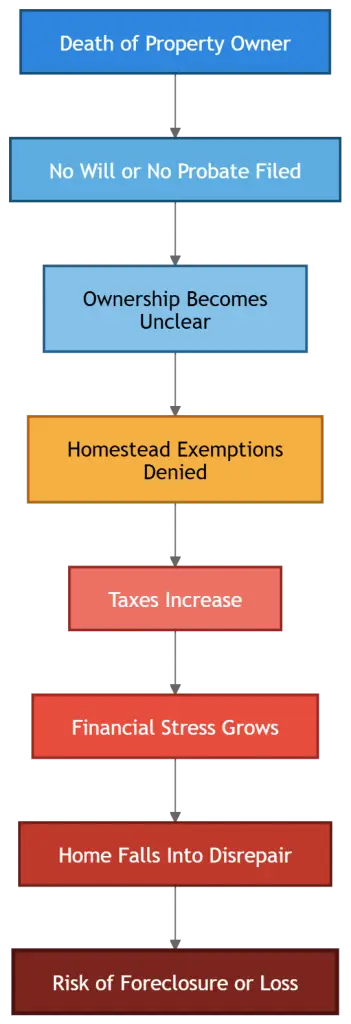
As time passes, homes may deteriorate, taxes accumulate, and legal complications multiply.
Below is an illustration families may experience during the probate cycle when there is no will or petition filed:
Remedies Georgia Families Can Use to Protect Their Homes
Families should navigate probate with education, communication, and trusted legal guidance.
1. Start Probate Early
The sooner families begin the probate process, the easier it becomes to:
- Transfer ownership legally
- Update deeds
- Preserve tax exemptions
- Prevent title disputes
Delaying probate often increases costs and complications.
2. Seek Experienced Probate Attorneys
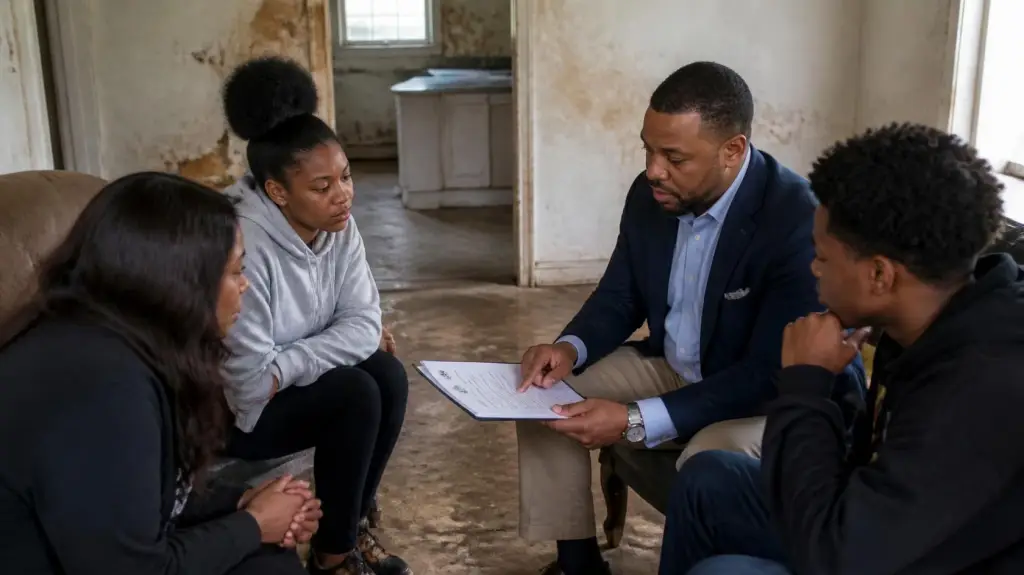
Families hiring compassionate legal counsel can transform confusion into clarity.
A knowledgeable probate attorney can help families:
| Legal Support | Benefit |
|---|---|
| Verify heirs | Prevent future ownership disputes |
| Transfer title correctly | Protect the property legally |
| Guide family conversations | Reduce conflict |
| Explain exemptions | Lower tax burdens |
| Ensure lawful transfers | Preserve generational wealth |
Good legal guidance creates peace of mind during a stressful season.
3. Apply for Homestead Exemptions Immediately
Many heirs lose valuable tax relief simply because they do not know it exists.
Families should:
- Contact the county tax assessor
- Verify eligibility
- Update ownership records
- Reapply after probate completion
This can significantly reduce annual property taxes.
4. Create Estate Plans Before Crisis Happens
A good rule for families during estate planning is:
“A will can save a home, but wisdom saves a legacy.”
Families should prepare:
- Wills
- Trusts
- Transfer-on-death plans
- Clear ownership documentation
These tools help prevent confusion for future generations.
5. Encourage Honest Family Communication
When heirs have the difficult but honest conversations it can help preserve relationships and property.
Families should discuss:
- Who wants to live in the home
- Who can afford maintenance
- Whether to keep or sell the property
- Shared responsibilities
Avoiding these conversations often creates deeper conflict later.
6. Hiring a Probate Real Estate Practitioner

A knowledgeable real estate practitioner can become a valuable partner for families navigating probate and heirs property challenges.
A compassionate real estate professional does more than sell homes. They help families protect generational wealth and make informed decisions during emotionally difficult times.

Ways a Real Estate Practitioner Can Support Families
| Real Estate Support | Benefit to the Family |
|---|---|
| Connect families with probate attorneys | Helps families start the legal process correctly |
| Explain property value and equity | Families understand what the home is worth |
| Identify tax risks | Prevents surprises related to unpaid taxes or exemptions |
| Recommend trusted contractors | Helps stabilize or repair inherited homes |
| Facilitate family conversations | Encourages realistic planning and cooperation |
| Educate heirs about probate timelines | Reduces confusion and stress |
| Assist with property preservation | Helps prevent neighborhood decline |
| Guide sale or refinance options | Provides solutions if heirs cannot maintain the property |
Should I sell or keep inherited home? There’s no one right answer. The best choice depends on your family, your finances, and what makes the most sense for the future. If you’re not sure where to start, read our blog What to Do With Inherited Property to learn about your options and take the next step with confidence.
Real Estate Practitioners Help Preserve Generational Wealth
Many families struggled simply because they lacked information. A real estate practitioner who understands probate can educate families before problems become overwhelming.
This includes helping heirs:
- Understand homestead exemptions
- Prepare homes for transfer or sale
- Avoid predatory investors
- Access community resources
- Develop long-term plans for inherited property
By building relationships with attorneys, lenders, tax professionals, and community organizations, real estate professionals can create a support network families desperately need.
Final Thoughts
The powerful truth for families is probate problems are not just legal issues but they are family legacy issues.
For many Georgia families, inherited homes represent:
- Sacrifice
- Stability
- Community roots
- Generational wealth
- Family history
When probate remains unresolved, families risk losing far more than property. They risk losing connection, memories, and opportunities for future generations.
But with education, planning, legal support, and community awareness, families can protect what previous generations worked so hard to build.
The path forward begins with awareness, compassion, and action.