





Understanding What Happens When You Inherit Real Estate in Georgia
Inheriting a home or property after the loss of a loved one can bring many emotions and important decisions. While an inherited property may represent a valuable asset, it can also create new responsibilities that families and executors may not be prepared to manage.
The process of settling an estate in Georgia often involves understanding Georgia probate court, estate administration, property ownership, and the responsibilities of heirs.
Many heirs and executors are unsure what to do next. Should the family keep the home? Should it be sold? Can one family member take ownership? What happens if multiple heirs disagree? These questions are common. Families may need to explore other solutions that fit their financial and personal goals.
Understanding Real Estate Options For Inherited Property gives families a starting point. By learning the available choices early, heirs and executors can make informed decisions that protect the property’s value and support a smoother estate settlement process.
This guide provides a general overview of the choices families may consider when managing inherited real estate in Georgia. Future articles will explore specific options in more detail, including financing solutions, selling strategies, property preparation, and ways families can navigate ownership transitions.
If your family has recently inherited property in Georgia, begin by learning your options before making rushed decisions. A clear understanding of the process can help protect the property’s value and support better family decisions.
Navigating Georgia Probate Court and Estate Administration
When someone passes away with property in their name, the property may need to go through Georgia probate court before ownership can officially transfer. Probate is the legal process used to validate a will, appoint an executor or administrator, identify assets, settle debts, and distribute property.
The person responsible for managing the estate is often called an executor when there is a valid will or an administrator when there is no will. This person helps guide the estate through the estate administration process.
During this time, families may need to address:
- Mortgage payments
- Property taxes
- Home insurance
- Maintenance and repairs
- Outstanding debts
- Property condition
- Multiple heirs with different goals
The probate timeline can vary depending on the complexity of the estate, court requirements, and whether disagreements occur among heirs.
For many families, the inherited home represents more than just a financial asset. It may be the family home where memories were created. At the same time, maintaining a property during probate can create financial responsibilities that the family may not be prepared to handle.
This is why understanding inherited property in Georgia is important before choosing a solution.
Real Estate Options For Inherited Property During Georgia Estate Settlement
Every family situation is different. The right choice depends on the property’s condition, financial circumstances, the wishes of the heirs, and the goals of the estate.
Below are general options families often consider.
Option 1: Keep the Inherited Property
Some families choose to keep the home because it has sentimental value or because they believe it is a good long-term investment.
Keeping the property may involve:
- Transferring ownership after probate is completed
- Taking responsibility for mortgage payments and expenses
- Maintaining the property
- Creating a plan among heirs
In some cases, one heir may want to keep the property while other heirs prefer to receive their inheritance value. Families may explore solutions such as a refinance, buyout arrangement, or other financial options.
Option 2: Sell the Inherited Property
Selling an inherited home is another common choice. A sale may help the family:
- Divide proceeds among heirs
- Pay estate expenses
- Resolve mortgage obligations
- Avoid ongoing maintenance costs
The process may involve preparing the home for sale, determining market value, addressing repairs, and coordinating with the executor and probate requirements.
Families searching for how to sell inherited property should understand that the timing and process may depend on whether probate has been completed and whether court approval is required.
Option 3: Rent the Property
Some heirs decide that selling immediately is not the best choice. Renting the property may provide income while the family evaluates long-term decisions.
Potential benefits include:
- Generating rental income
- Covering some property expenses
- Holding the property until heirs determine the best direction
However, renting also creates responsibilities, including tenant management, repairs, insurance considerations, and compliance with local requirements.
Option 4: One Heir Buys Out Other Heirs
When multiple family members inherit property, everyone may not have the same goals.
One heir may want to live in the home while others may prefer financial distribution.
A potential solution is an heir buyout, where one family member obtains ownership and compensates other heirs for their share of the property value.
This approach may allow the family home to remain within the family while creating a fair outcome for everyone involved.
Option 5: Explore Financing Solutions for Inherited Property
Not every family is ready to sell an inherited home, and not every heir has the financial resources to keep it without assistance. Depending on the estate’s circumstances, financing may provide additional flexibility while important decisions are being made.
Some families may consider financing options to:
- Reduce monthly mortgage payments.
- Cover estate-related expenses.
- Make necessary repairs or improvements.
- Help one heir purchase the interests of other beneficiaries.
- Create additional time to complete the probate process without rushing into a sale.
The availability of these solutions depends on factors such as property ownership, available equity, lender requirements, and whether the probate process has progressed enough for financing to occur.
Because every estate is unique, financing should be evaluated carefully alongside the family’s long-term goals and financial situation.
Rather than viewing financing as simply borrowing money, many families use it as a planning tool that provides more choices during estate settlement.
Making the Right Choice for Your Family and Estate Goals
Choosing what to do with inherited property is not only a financial decision. It is also a family decision.
Executors and heirs should consider four important questions:
1. Does the family want to keep the home?
If the answer is yes, explore whether keeping the property is financially realistic and whether one person or multiple heirs will manage ownership responsibilities.
If the answer is no, selling may provide a simpler way to settle the estate.
2. Is there enough equity in the property?
Equity can create additional options. A property with significant equity may provide opportunities for refinancing, repairs, or heir distribution.
A property with little equity may require different solutions, including selling or negotiating with lenders.
3. Can an heir qualify to take ownership?
Keeping inherited real estate may require an heir to qualify financially for future mortgage obligations, taxes, insurance, and maintenance.
4. Are the family’s financial challenges temporary or long-term?
Some families experience short-term challenges while waiting for probate completion. Others may discover that maintaining the property is not financially practical.
Below is a flow diagram which shows how heirs and executors evaluate the 4 inherited property decisions during Georgia estate settlement process. Understanding the difference can help families make better choices and achieved their future goal.
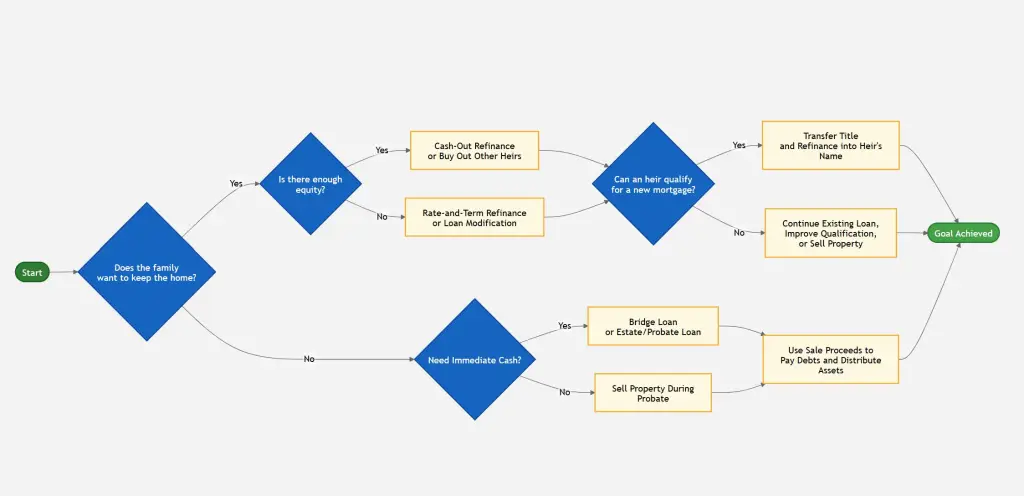
How the chart helps with decision making? Beginning with the fundamental question of whether the family wants to keep or sell the home, the flowchart guides them through important considerations such as available home equity, an heir’s ability to qualify for financing, and whether financial challenges are short or long-term. Each answer leads to one or more potential real estate solutions, including refinancing, loan modification, heir buyouts, bridge financing, or selling the property during probate.
Before deciding what happens to an inherited home, create a plan based on the family’s goals, financial situation, and the property’s condition. Taking time to evaluate options can help protect both relationships and the value of the estate.
Need a family plan? Explore our blog Creating a Legacy Inherited Property Plan to learn about the factors that can influence your decision and discover strategies to help protect your family’s interests and the value of the estate.

Take the Next Step With Your Inherited Property Decision
Handling inherited real estate in Georgia does not have to be confusing when families understand the process and available choices.
The first steps are usually:
- Confirm the property ownership and probate status.
- Understand the responsibilities of the executor or heirs.
- Review the property’s financial situation.
- Discuss family goals.
- Explore possible real estate solutions.
Whether the family decides to keep, sell, rent, or transfer ownership, informed decisions can make the estate settlement process smoother.
If your family is navigating inherited property in Georgia, start by gathering information, understanding your responsibilities, and exploring your available real estate options.
For more practical guidance, expert insights, and tips to help you make informed decisions about real estate property and probate administration in Georgia, subscribe to our newsletter and download your Free Probate Kit Guide. You’ll receive valuable information delivered directly to your inbox so you can move forward with greater confidence and clarity.
Frequently Asked Questions About Inherited Property in Georgia
What happens to a house when someone dies in Georgia?
A home may become part of the deceased person’s estate and may need to go through Georgia probate court before ownership transfers. The process depends on whether there is a will, the type of ownership, and the estate circumstances.
Do heirs have to sell inherited property in Georgia?
No. Heirs are not always required to sell inherited property. Families may choose to keep the home, rent it, transfer ownership, or sell depending on their circumstances.
Can one heir keep an inherited house?
Yes, in many situations one heir may keep the property by reaching an agreement with other heirs. This may involve compensation or other arrangements to balance inheritance interests.
How is inherited property divided among siblings?
Inherited property may be divided according to the will, Georgia inheritance laws, or agreements among heirs. Real estate decisions can become more complicated when multiple people inherit ownership.
Should inherited property be sold during probate?
The answer depends on the estate situation. Some properties may be sold during probate if allowed, while others may need probate completion before ownership changes.
What are common problems with inherited property?
Common challenges include disagreements among heirs, unpaid expenses, property maintenance, mortgage obligations, unclear ownership, and emotional difficulty making decisions after a loss.
Final Thoughts
Inherited real estate represents both a financial responsibility and a family legacy. By understanding Real Estate Options For Inherited Property, Georgia heirs and executors can approach estate decisions with greater confidence.
The goal is not simply deciding what happens to a house. The goal is finding a solution that respects the estate, protects the property’s value, and supports the family’s future.