



Understanding Probate Administration in Georgia

Losing someone you love is difficult enough without having to figure out what happens to their home, money, belongings, and unpaid bills. Georgia probate administration is the legal process used to handle many of these matters after someone dies. The Georgia probate court oversees important parts of the process, while an executor or administrator manages the estate.
Understanding who does what can make the probate process less confusing. Whether a loved one left a will or died without one, families need to understand the basic Georgia probate process. They should also know the responsibilities of the personal representative and the role of the probate court. Understanding these roles can help families move forward with greater confidence.
What Happens During Georgia Probate Administration?
When someone dies, their estate may need to be settled before property and money can be passed to the people entitled to receive them. This is where probate administration comes in.
In Georgia, probate courts have original jurisdiction over the probate of wills and the administration of decedents’ estates.
The person responsible for handling an estate is generally called the personal representative. When a valid will names an executor, the probate court may appoint that person to serve as executor. If there is no will, or the named executor cannot serve, the probate court may appoint an administrator.
If your family is beginning the Georgia probate process, start by identifying whether there is a will, locating important financial documents, and determining which county’s probate court has jurisdiction.
Read our blog Understanding Estate Assets for more information what documents to locate and how to organize the deceased person’s assets and debts.
Executor vs. Administrator — Who Does What?
How Is an Executor Appointed in Georgia?
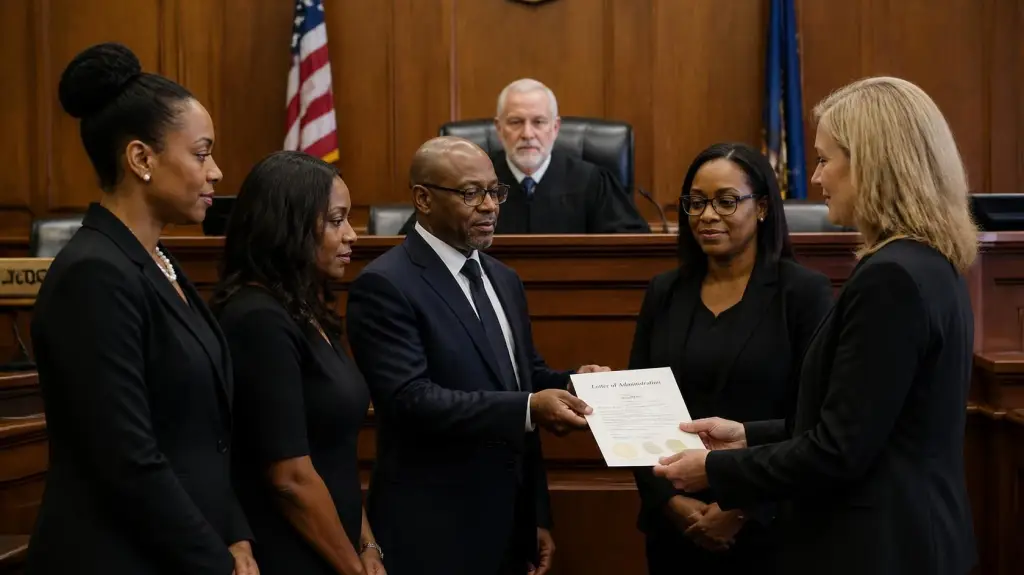
An executor is usually the person named in a will to carry out the deceased person’s wishes. The will nominates the person, but the probate court formally gives the executor authority to act.
After the will is presented for probate and the required court process is completed, the court may issue Letters Testamentary. These letters provide evidence of the executor’s authority to administer the estate.
The executor’s job can include:
- Taking control of estate assets.
- Identifying and protecting property.
- Gathering information about debts and obligations.
- Paying legitimate estate expenses and debts.
- Handling required notices and court filings.
- Managing or selling estate property when legally permitted.
- Keeping accurate financial records.
- Distributing remaining assets according to the will and Georgia law.
- Completing the required accounting and closing the estate.
Georgia court records describe estate administration as including the qualification of a legal representative and the management and distribution of estate assets.
How Is an Administrator Appointed in Georgia?
An administrator generally handles an estate when there is no valid will controlling the appointment of an executor. The probate court appoints the administrator and issues the appropriate authority to administer the estate.
Georgia government guidance explains that an administrator is appointed by the Probate Court to handle the property of a Georgia decedent who did not leave a valid will.
The administrator performs many of the same basic estate-settlement duties as an executor, but the rules can be different because the administrator is generally working under Georgia’s intestacy laws rather than following a person’s valid will.
In simple terms:
Executor = nominated by the will and appointed by the court.
Administrator = appointed by the court when an administrator is needed, commonly when there is no valid will governing the estate.
What Does the Georgia Probate Court Do?
The Georgia Probate Court is not simply a place where paperwork is filed. It provides court oversight for estate matters within its jurisdiction.
Depending on the case, the court may review petitions, probate a will, appoint or qualify a personal representative, issue authority to act, review required filings, and address disputes or requests that require judicial action.
Georgia’s courts also maintain standard probate forms and systems for estate-related filings.
What Families Should Expect During Estate Settlement
The goal of estate settlement in Georgia is to responsibly handle the deceased person’s affairs and eventually transfer the remaining property to the people legally entitled to receive it.
A responsible executor or administrator should approach the job with care. This is especially important because the personal representative has duties toward heirs and beneficiaries and must properly manage estate property.
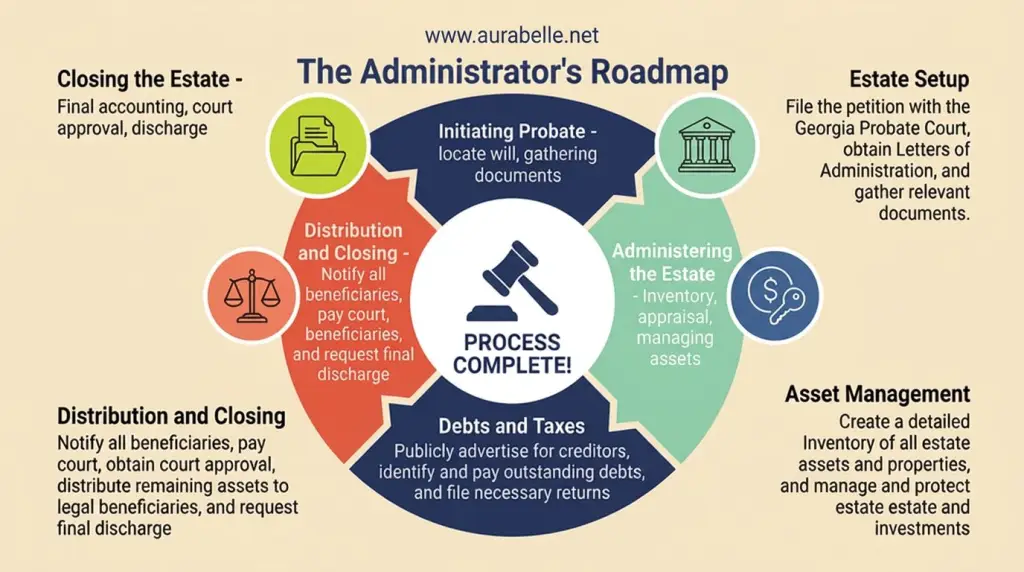
A typical probate estate may involve several steps:
- Opening the estate: Required documents and petitions are filed with the appropriate probate court.
- Obtaining authority: The executor or administrator receives court authority to act.
- Finding assets: Bank accounts, real estate, vehicles, investments, personal property, and other assets are identified.
- Reviewing debts: Valid debts, expenses, and obligations are identified and handled according to applicable law.
- Managing property: Estate property is protected and managed while the estate is being settled.
- Handling required filings: The personal representative completes required reports, returns, or other court documents.
- Distributing assets: After the necessary debts, expenses, and legal requirements have been addressed, remaining property can be distributed as required by the will or Georgia law.
- Closing the estate: Final accounting and discharge procedures may be required before the personal representative’s responsibilities end.
Georgia court materials specifically recognize inventory and asset management plans, as well as annual and final returns, among estate-related probate actions.
This is why probate administration should not be viewed simply as “dividing up someone’s belongings.” It is a legal responsibility that requires organization, honesty, careful recordkeeping, and patience.
Serving as an executor or administrator can come with many questions. Use our Probate Administration Event Activities guide as a checklist to learn about the key events in Georgia probate proceedings. Learn who is involved in the Georgia probate process, understand your potential responsibilities, and know what to expect as the estate moves toward settlement.
Take the Next Step With Confidence

If you are serving as an executor or administrator in Georgia, you do not have to understand every probate rule on your own.
Begin by gathering the will, death certificate, property records, bank information, insurance documents, bills, tax records, and other important paperwork. Keep estate money and personal money separate, maintain clear records, and do not distribute estate property simply because family members agree. Some actions may require court approval or compliance with specific Georgia probate procedures.
If the estate is complicated, family members disagree, real estate is involved, or you are unsure about your legal responsibilities, consider speaking with a Georgia probate attorney who can explain the requirements that apply to your particular estate.
Explore our blog Who Should Be on Your Estate Team. Learn how an estate team can help make the process easier to understand and manage.
The Georgia Probate Courts Council also recommends contacting the probate court where a proceeding is pending for questions about that specific court proceeding; the Council itself does not provide legal advice.
Frequently Asked Questions About Georgia Probate
How long does probate take in Georgia?
There is no single timeline for every estate. The length can depend on the assets, debts, required notices, court filings, disputes, tax matters, real estate, and whether beneficiaries agree.
Is an executor automatically appointed if named in a will?
No. Being named in a will is a nomination. The probate court must complete the appointment process and issue the appropriate authority before the person can act as the estate’s executor.
What happens if someone dies without a will in Georgia?
The estate is generally handled under Georgia’s intestacy laws, and the probate court may appoint an administrator to manage the estate.
What is the difference between an executor and an administrator?
An executor is generally nominated in a will and appointed by the probate court. An administrator is appointed by the court to administer an estate when an executor is not serving, commonly because there is no valid will governing the appointment.
Does every estate have to go through probate?
Not necessarily. Whether probate is required depends on how assets are owned, whether beneficiaries are designated, and other legal circumstances. Some assets may pass outside probate.
What is the personal representative responsible for?
The personal representative is responsible for properly administering the estate. This can include protecting assets, identifying debts, making required filings, keeping records, and distributing property according to the will or Georgia law.
Final Thought
Georgia probate administration can feel overwhelming, particularly when a family is already grieving. But understanding the roles of the probate court, executor, administrator, heirs, and beneficiaries can make the process easier to follow.
With careful organization, honest communication, and appropriate professional guidance when needed, families can work through estate administration in Georgia one step at a time.