


Why the Right Estate Team Can Make a Difference
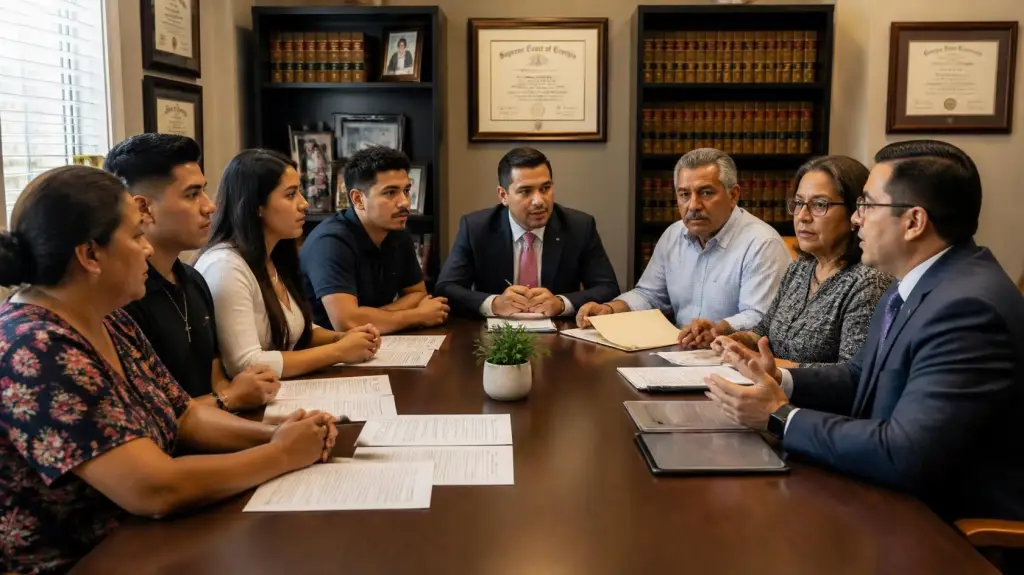
When a family loses someone they love, the legal and financial responsibilities can arrive at the same time as grief. There may be a home to maintain, bills to review, accounts to identify, tax questions to answer, and family members who need information. That is why building the right estate team can make the process easier to understand and manage.
An estate team is not necessarily a large group of people. For a simple estate, one professional may be enough to answer a particular question. A more complicated estate, however, may benefit from several professionals working in their areas of expertise.
For families dealing with the Georgia probate process, the most common professionals to consider include a probate attorney, tax professional, financial professional, and real estate professional. The person serving as executor of an estate or another personal representative remains central to the process, but that person does not have to know how to perform every professional task alone.
The goal is not to hire everyone immediately. Instead, it is to understand what each professional does, recognize when help may be valuable, and build a team that matches the estate’s actual needs.
Estate Team: Start With the Person Responsible for the Estate
Before choosing outside professionals, a family should understand who is responsible for administering the estate.
Georgia law explains that a will can name an executor who submits the will to probate court and helps carry out the person’s wishes. If an executor is not named, the probate court can appoint someone.
The person serving in this role may be referred to as an executor, administrator, or personal representative, depending on the circumstances and appointment.
That person often becomes the central point of communication.
The representative may need to coordinate information about:
- Estate assets.
- Estate debts.
- Beneficiaries and heirs.
- Real estate.
- Financial accounts.
- Taxes.
- Insurance.
- Estate expenses.
- Court filings.
- Professional services.
The representative does not necessarily perform every task personally. Instead, one of the most important responsibilities can be knowing when a question requires specialized assistance.
Recognize When You Need Help
A new executor may feel pressure to know everything. That is unrealistic.
Probate involves legal procedures. Taxes involve specialized rules. Investments have their own considerations. Real estate transactions require market knowledge and compliance with applicable requirements.
For that reason, the first question should not always be, “Can I do this myself?”
A better question is, “Who is qualified to help with this part of the estate?”
Make a list of the estate’s major issues before hiring anyone. Then match each issue with the professional best equipped to address it.
Read our blog What is Georgia Probate Inventory. Learn how to keep supporting records and why good documentation can help with making decisions, hiring a professional, prevent confusion and family disputes.
What Does an Estate Team Do?
An estate planning team and an estate administration team are related but not always identical.
Estate planning happens while a person is alive and generally focuses on preparing documents and decisions for the future. Estate administration happens after death and involves handling the person’s estate under the applicable legal process.
The same attorney, financial professional, or tax professional may sometimes have a role in both stages. However, families should determine what assistance is actually needed after the person’s death.
A useful way to understand the roles is:
| Professional | Main Area of Help | When They May Be Useful |
|---|---|---|
| Probate attorney | Probate law and estate administration | Court filings, legal questions, disputes |
| Tax professional | Tax returns and tax issues | Income, estate, or complex tax matters |
| Financial professional | Financial accounts and investment questions | Investments and financial organization |
| Real estate professional | Property marketing and transaction support | Selling or evaluating real estate |
| Executor/personal representative | Overall estate administration | Coordinates the estate and follows legal authority |
The table is a planning tool, not a requirement that every estate hire all five. The needs of a modest estate can be very different from those of an estate with multiple properties, businesses, investments, or family disputes.
Consider a Probate Attorney First
For many families, the probate attorney is the first professional to consider.
A probate attorney can help explain the legal side of the probate process, including questions about the will, court filings, estate administration, creditor issues, property, beneficiaries, and distributions.
Georgia probate courts have authority over wills and estates, and Georgia’s probate courts administer wills and estates through the court system.
The need for legal assistance can become especially important when an estate is complicated.
A probate attorney may be particularly useful when:
- The will is being challenged.
- Family members disagree about the estate.
- The estate owns significant real estate.
- There are questions about ownership.
- The estate has substantial debts.
- A beneficiary cannot be located.
- A business is part of the estate.
- The executor is uncertain about legal authority.
- Court filings are confusing.
- There are questions about distributions.
- Someone claims that property belongs to them.
A lawyer’s role is not necessarily to take control of the estate. Instead, the attorney can help the personal representative understand legal responsibilities and make decisions within the applicable framework.
If you are uncertain about your legal authority or what the Georgia probate process requires, consider consulting a Georgia attorney experienced in probate and estate administration before taking major action.
Read our blog When to Hire an Probate Attorney. Learn when to seek professional advice when making decisions has become too complex while managing the estate. Understand how a professional can help protect the estate and avoid costly mistakes.
Know When a Tax Professional Belongs on the Team
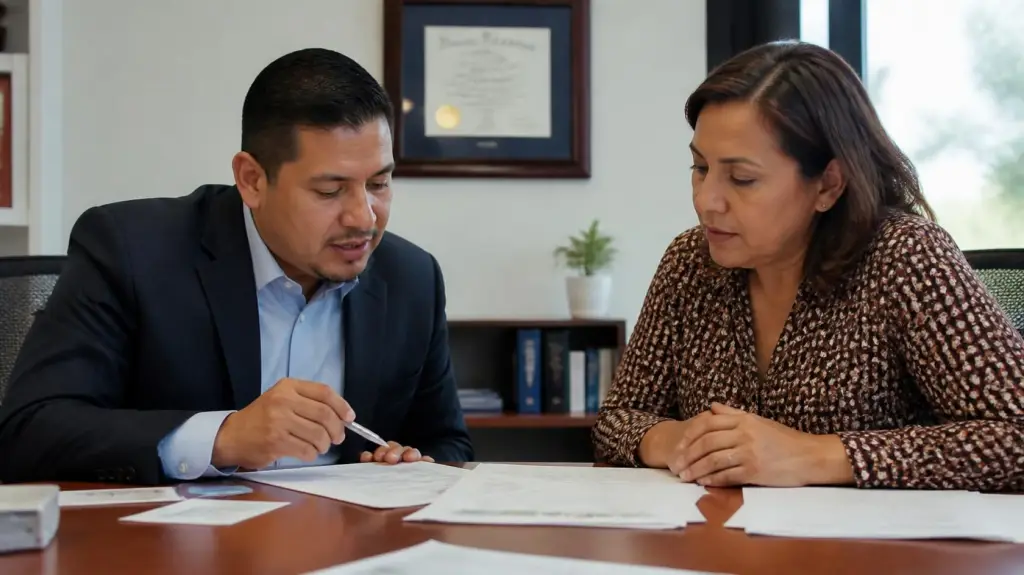
Taxes are another area where professional advice may be helpful.
A tax professional may assist with tax returns, income received by the estate, reporting requirements, and questions about the deceased person’s final tax matters.
The Georgia Department of Revenue states that a surviving spouse, administrator, or executor may file a return on behalf of a taxpayer who died during the tax year.
Georgia also currently has no state estate tax for deaths occurring after the historical period covered by its estate-tax rules, and Georgia has no inheritance tax. However, federal tax rules and other tax issues can still matter depending on the estate.
That distinction is important. A family should not assume that “Georgia has no estate tax” means an estate has no tax responsibilities.
A tax professional may be valuable when the estate involves:
- Income earned before death.
- Income earned after death.
- Investment income.
- Real estate sales.
- Business interests.
- Complex deductions.
- Multiple tax returns.
- Property in more than one state.
- Significant assets.
- Questions about federal estate or gift tax.
- Unusual financial transactions.
The appropriate tax professional may be a certified public accountant, enrolled agent, attorney with relevant tax expertise, or another qualified professional depending on the issue.
Do not wait until the end of administration to discover a tax question. Identify potential tax issues early and ask a qualified tax professional what records should be preserved.
Read our blog What Georgia Estate Tax Questions to Ask. Understand income tax, property tax, capital gains tax, inherited property, and federal estate tax rules before assets are sold or distributed.
When a Financial Professional May Help
A financial professional can be useful when an estate includes investments, retirement accounts, complex financial holdings, or significant cash-management decisions.
However, the financial professional’s role should be clearly defined.
The executor remains responsible for administering the estate within the authority granted by law and applicable court orders. A financial professional may provide financial information or advice, but that does not automatically give the professional authority over estate property.
A financial professional may help with questions involving:
- Investment accounts.
- Securities.
- Retirement accounts.
- Cash management.
- Investment statements.
- Portfolio organization.
- Account ownership.
- Beneficiary designations.
- Financial records.
- Investment-related decisions.
One important caution is that not every account is necessarily a probate asset. Beneficiary designations and ownership arrangements can affect how certain assets transfer.
Therefore, an executor should identify how an account is titled before assuming it belongs in the probate estate.
Know When to Bring in a Real Estate Professional
Real estate can be one of the most valuable assets in an estate.
A real estate professional may help when the estate owns a home, rental property, land, commercial property, or another type of real property that may need to be evaluated or sold.
The first step, however, is not necessarily listing the property.
The executor should first confirm ownership, authority, mortgage information, insurance, taxes, and the legal requirements applicable to the property.
Georgia property taxes are administered at the county and municipal level, and property taxes are generally paid annually in the county where the property is located.
That means a real estate professional can be one part of the team, while the probate attorney and other advisers address legal and financial questions.
A real estate professional may assist with:
- Market information.
- Comparative property analysis.
- Preparing a property for sale.
- Marketing.
- Showings.
- Offers.
- Negotiations.
- Communication with buyers.
- Coordination with closing professionals.
If a sale occurs, there can also be transaction-related taxes and recording requirements. Georgia’s Department of Revenue explains that real estate transfer tax applies to transactions involving transfers of real property.
Before listing estate real estate, make sure the person acting for the estate has the authority to sell and understands any probate requirements that apply to the property.
Read our blog What is Georgia Estate Settlement. Learn about who manages a deceased person’s property and financial assets according to applicable Georgia law.
Property Issues Can Require More Than One Professional
One of the biggest mistakes families make is assuming that one professional can answer every question.
Consider an estate with a house worth $500,000 and an outstanding mortgage.
The real estate professional may help determine market value and prepare the property for sale. The probate attorney may address authority and legal procedure. The tax professional may advise about tax reporting and the financial consequences of the transaction.
Each person has a different job.
This division can make the estate team more effective because it keeps professional advice within the appropriate area.
Build Your Estate Team Around the Estate's Needs
Once you understand the major roles, build your team gradually.
Start with the issues that require immediate attention. Then add professionals when a specific question arises.
A practical estate team checklist can include:
- Identify the executor or personal representative.
- Confirm the status of the probate case.
- Locate the will and important estate documents.
- Determine whether legal assistance is needed.
- Identify potential tax questions.
- Review financial accounts.
- Identify real estate.
- Determine whether property needs immediate maintenance.
- Organize estate expenses.
- Identify beneficiaries and heirs.
- Make a list of unresolved questions.
- Keep contact information for each professional in one place.
This approach avoids paying for unnecessary services while still giving the family access to specialized help when it matters.
Build the team based on the estate’s complexity rather than choosing professionals simply because someone recommended that every estate needs the same group.
Read our blog Caring for a Home During Probate to understand who protects the home while the estate is being settled. Learn what parts of the estate property needs regular attention and maintenance.
How to Choose a Probate Attorney
Finding a probate attorney is not only about choosing the person with the largest firm.
Families should consider whether the attorney regularly handles Georgia probate and estate administration matters.
Questions to ask may include:
- How much of your practice involves probate?
- Do you handle estates similar to ours?
- Who will communicate with the executor?
- What services are included?
- How are fees calculated?
- What court filings may be required?
- How will family disputes be handled?
- What information should we gather before the first meeting?
The answers can help the executor determine whether the attorney is a good fit.
Georgia’s probate courts vary in their responsibilities, and the Council of Probate Judges notes that specific questions about a pending proceeding should be directed to the court where that proceeding is pending.
How to Choose a Tax Professional
A tax professional should understand the type of tax issues the estate may face.
For a straightforward estate, the family’s existing tax preparer may be able to handle appropriate matters. A more complicated estate may require someone with experience in estate and trust taxation.
Ask about:
- Experience with deceased taxpayers.
- Estate and trust tax experience.
- Federal tax issues.
- Georgia tax issues.
- Real estate transactions.
- Business interests.
- Communication with the executor.
- Recordkeeping expectations.
The Georgia Department of Revenue maintains information and resources for tax professionals, including guidance on authorizations and taxpayer information.
How to Choose a Financial Professional
A financial professional should understand that estate assets are being administered rather than treated as ordinary personal investments.
The executor should explain that the accounts belong to or relate to an estate and clarify who has authority to give instructions.
Questions worth asking include:
- Do you work with estates?
- How do you document estate transactions?
- What fees apply?
- How will statements be provided?
- Can you help identify account ownership?
- How do you handle beneficiary-designation questions?
- Will you coordinate with the executor’s attorney and tax professional when appropriate?
Clear communication at the beginning can prevent confusion later.
How to Choose a Real Estate Professional
A real estate professional working with an estate should understand that the seller may be a personal representative rather than the original homeowner.
Ask whether the professional has experience with inherited property or estate sales.
Important questions include:
- Have you worked with estate-owned property?
- What documents will you need?
- How would you determine market value?
- What repairs do you recommend?
- How will property access be managed?
- How will offers be communicated?
- Who will coordinate with the closing attorney?
- Are there local market conditions that should influence the timing?
The right professional should be comfortable coordinating with the estate’s legal representative rather than treating the transaction like an ordinary homeowner sale.
What the Executor Should Keep in One Place
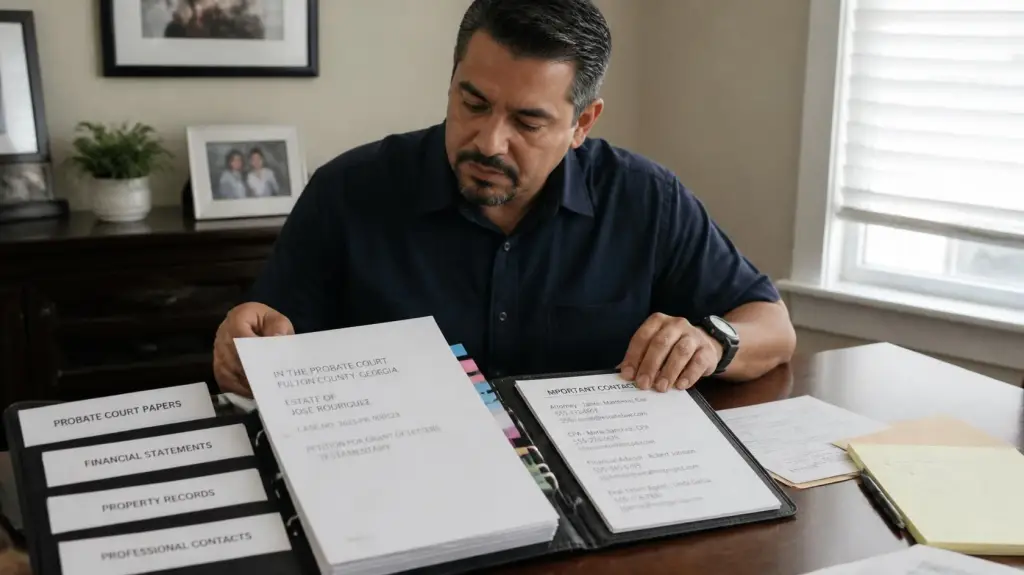
An organized executor can make every professional’s job easier.
Create a secure central file containing:
- Will and amendments.
- Probate court documents.
- Letters testamentary or other appointment documentation.
- Death certificates.
- Asset records.
- Bank statements.
- Investment statements.
- Property records.
- Mortgage information.
- Insurance information.
- Tax returns.
- Creditor information.
- Beneficiary information.
- Heir information.
- Estate expense receipts.
- Professional invoices.
- Important correspondence.
Georgia Courts provides probate forms and resources for probate proceedings, so it is useful to keep official court documents separate from informal notes and family records.
Communication Is Part of a Strong Estate Team
A strong estate team is not simply a collection of professionals. The team also needs communication.
For example, a property sale may create legal, tax, and financial questions. If the real estate professional, attorney, and tax professional are all working from different information, the executor may spend unnecessary time resolving misunderstandings.
The executor can help by maintaining a basic communication system.
Keep:
- A current contact list.
- Notes from professional meetings.
- Copies of important emails.
- Dates of important deadlines.
- Questions awaiting answers.
- Documents requested by professionals.
- Records of significant decisions.
This does not mean every professional needs to participate in every conversation. Instead, the goal is to make sure important information reaches the person who needs it.
Warning Signs That You May Need a Larger Team
Some estates can be handled with limited professional assistance. Others become complicated quickly.
A larger estate planning team or administration team may be appropriate when there are several moving parts.
Watch for signs such as:
- Multiple real estate properties.
- Property in several states.
- A closely held business.
- Large investment accounts.
- Significant debt.
- Disputes among beneficiaries.
- Questions about the validity of the will.
- Missing heirs.
- Complicated beneficiary designations.
- Unclear ownership.
- Tax concerns.
- Assets held in trusts.
- Real estate that needs major repairs.
- Family members who disagree about selling property.
These circumstances do not automatically mean that the estate will be difficult. They simply indicate that professional guidance may save time and reduce avoidable mistakes.
Common Mistakes When Building an Estate Team
Families can also make mistakes when choosing advisers.
One common problem is hiring someone solely because they are a friend or family acquaintance. Personal trust matters, but relevant experience matters too.
Other mistakes include:
- Hiring a professional without asking about fees.
- Assuming one professional handles every issue.
- Failing to tell professionals about other advisers.
- Not keeping copies of important records.
- Giving professionals incomplete information.
- Delaying tax questions.
- Listing property before confirming legal authority.
- Making financial decisions without understanding ownership.
- Choosing professionals without considering the estate’s actual needs.
The solution is straightforward: define the problem first, then choose the professional who is qualified to address it.
FAQ: Building an Estate Team in Georgia
What is an estate team?
An estate team is the group of people who help an executor or personal representative manage different aspects of an estate. Depending on the circumstances, it may include a probate attorney, tax professional, financial professional, real estate professional, and other specialists.Does every estate need an estate team?
No. A simple estate may require limited professional assistance. A more complicated estate may benefit from several advisers. The right team depends on the estate’s assets, debts, property, family situation, and legal or tax issues.Should I hire a probate attorney first?
For many estates, a probate attorney can be a useful first professional because the attorney can help the executor understand the legal requirements of the Georgia probate process. However, the appropriate starting point depends on the estate.What does a tax professional do for an estate?
A tax professional can help with applicable tax returns, income received by the estate, tax reporting, and more complex federal or state tax questions. Georgia’s Department of Revenue provides specific information concerning deceased taxpayers and tax professionals.Does Georgia have an estate tax?
Georgia currently does not impose a state estate tax for applicable modern estates, and Georgia has no inheritance tax. However, federal taxes and other tax obligations may still apply depending on the circumstances.When should I hire a real estate professional?
Consider a real estate professional when the estate owns property that may need valuation, maintenance, marketing, or sale. Before listing property, however, the executor should confirm legal authority and address applicable probate requirements.What does a financial professional do?
A financial professional may help organize investment accounts, understand financial statements, address investment-related questions, and coordinate financial information. The professional does not automatically become the person authorized to administer the estate.What is the difference between an executor and a personal representative?
The terminology can depend on the type of estate proceeding and the person’s appointment. An executor is commonly the person named in a will to carry out the deceased person’s wishes through the appropriate legal process. Personal representative is a broader term often used for the person legally responsible for administering an estate.Can one professional handle everything?
Usually, no single professional should be expected to replace every other specialist. A probate attorney handles legal issues, a tax professional handles tax matters, a financial professional handles appropriate financial questions, and a real estate professional handles real estate services.How should the estate team communicate?
The executor should maintain a central record of professionals, documents, deadlines, questions, and significant decisions. Professionals should receive the information they need to perform their specific roles.Conclusion: Build the Team the Estate Actually Needs
The best estate team is not necessarily the biggest one. It is the team that gives the executor the right help at the right time.
For many families, a probate attorney can provide guidance about the legal side of estate administration and the Georgia probate process. A tax professional can help with tax questions. A financial professional may assist with investment and account issues. A real estate professional can help when property needs to be evaluated or sold.
The executor or personal representative remains at the center of the process. That person coordinates the estate, protects property, keeps records, and follows the applicable legal requirements.
Most importantly, do not build an estate team based on fear or pressure. Start with the estate’s actual needs. Identify the questions that you cannot confidently answer. Then bring in qualified professionals for those specific issues.
When everyone understands their role, families can approach estate settlement with greater clarity and less confusion.
An organized team cannot eliminate every challenge. However, it can give the family something valuable during a difficult time: a clear path forward.