



Understanding the Final Stage of Estate Settlement
When a family reaches the later stages of Georgia probate, it is natural to wonder, “Are we finally finished?” A final estate accounting can be an important part of answering that question. It gives the family and, when required, the Probate Court a clear picture of what happened to the estate during administration.
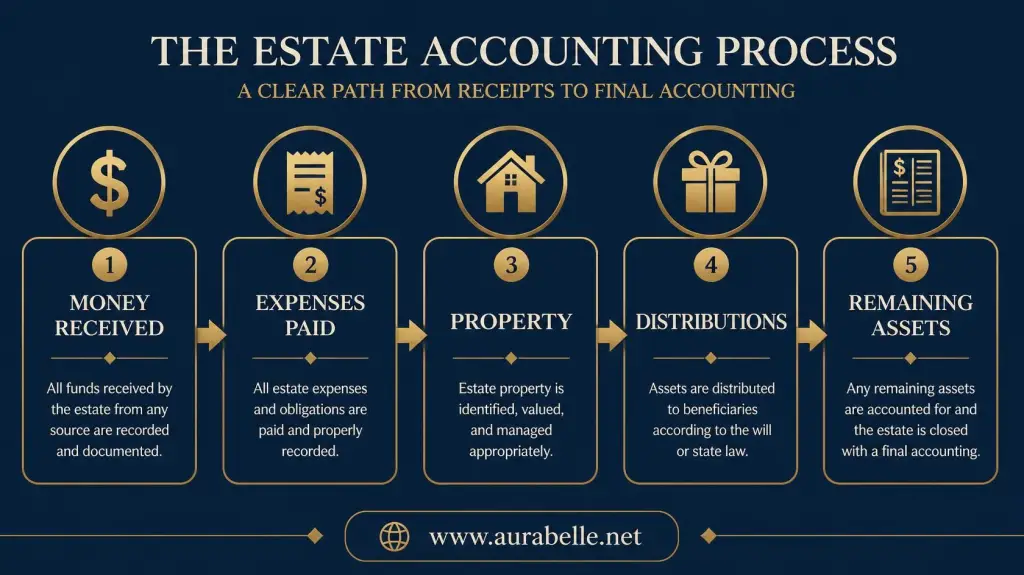
An estate accounting generally tracks money received, expenses paid, property handled, distributions made to heirs or beneficiaries, and assets that remain. Georgia court materials describe an annual or final return as an accounting under oath of estate receipts and expenditures, together with information needed to show the true condition of the estate.
This guide will cover what goes into the process during the final stages. This will help prepare families to see whole the financial story of the estate clearly before the personal representative asks to finish the job.
Could the Estate Be Ready to Close?

Families sometimes think an estate is finished when the house has been sold or the bank account has been opened. In reality, several pieces may need to come together before the estate can move toward completion.
A final estate accounting is essentially a financial summary. It helps answer questions such as:
- What money did the estate receive?
- What bills, taxes, fees, and other expenses were paid?
- What property did the estate own or sell?
- What was distributed to heirs or beneficiaries?
- What remaining assets are still held by the estate?
These questions matter because an executor or administrator is not simply managing personal money. A personal representative is handling property for the estate and those who are legally entitled to receive it.
Georgia court records describe estate case files as including matters involving the management and distribution of estate assets, inventories, applications concerning property, and annual and final returns.
If your family is approaching the end of probate, start by gathering every estate financial record in one place. A clean record trail can make the next conversation with your attorney, accountant, or Probate Court much easier.
Read our blog What is Georgia Probate Inventory. Learn how to keep supporting records and why good documentation can help prevent confusion, disputes, and unanswered questions later.
What Goes Into a Final Estate Accounting?
The easiest way to understand estate accounting is to think of it as a financial story. The beginning shows what the estate had. The middle explains what came in and what went out. The ending shows what was distributed and what is left.
Money Received by the Estate
The accounting should identify money that came into the estate during administration. Depending on the circumstances, this could include bank funds, refunds, investment income, rent, proceeds from selling property, or money owed to the person who died.
For example, suppose a parent owned a rental property. After death, the estate might receive rent while the property is being administered. That income should not disappear from the financial record. It is part of the estate’s financial activity.
Keeping bank statements and deposit records is therefore important. They can help show where estate funds came from and how the balance changed.
Expenses and Payments Made
The next part explains money that went out.
Common estate expenses may include funeral-related expenses, court costs, property expenses, taxes, professional fees, creditor claims, insurance, repairs, and other legitimate administration costs. The exact treatment of a payment can depend on Georgia law and the facts of the estate.
A personal representative should not simply list a total amount called “expenses.” Clear records are more useful because they allow someone reviewing the accounting to understand what was paid and why.
Georgia probate materials specifically describe returns as accounting for receipts and expenditures and other facts needed to show the estate’s true condition.
Property and Estate Assets
Money is only one part of an estate. Estate assets can include a house, land, vehicles, personal property, business interests, financial accounts, or other property.
An estate inventory and the later accounting serve different but connected purposes. The inventory identifies property known to belong to the estate, while the accounting helps show what happened to that property during administration.
For example, a house may begin as an estate asset. Later, it could be sold. The accounting should then reflect the transaction and the money received, while supporting records document the sale.
That connection is important because the numbers should make sense when viewed as a whole.
Distributions to Heirs and Beneficiaries
Once debts and appropriate expenses have been handled, estate property may be distributed according to the will or applicable Georgia law.
A beneficiary distribution might be cash, a vehicle, personal property, real estate, or another estate asset. The record should identify what was distributed and to whom.
Families can reduce confusion by keeping signed receipts or other reliable documentation showing what each person received. This is especially helpful when several beneficiaries are involved.
A simple written record can prevent a later disagreement such as, “I thought I was supposed to receive that account,” or “Was that payment part of my inheritance?”
Remaining Assets at the End
One of the most important questions in a final estate accounting is what remains.
If the estate still owns a house, has money in a bank account, or possesses personal property, the family needs to know why it remains and what is supposed to happen next.
The final balance should be explainable. If the estate has not yet distributed everything, the personal representative may need to complete additional steps before the estate can be fully closed.
Georgia’s Probate Court system recognizes accounting and disbursement functions as part of probate administration.
How a Final Accounting Helps the Family
A well-organized final estate accounting does more than satisfy paperwork requirements. It can give family members confidence that the estate was handled carefully.
It Creates Transparency
Estate administration can create tension even when everyone loves and trusts one another. Money can make uncertainty worse.
A clear accounting gives everyone a common set of facts. Instead of guessing where the money went, family members can review the documented transactions.
It Helps Identify Missing Pieces
Preparing the accounting can uncover problems before the estate is closed.
For example, the review might reveal:
- An estate bank account still has money in it.
- A final bill has not been paid.
- A property sale has not been fully documented.
- A beneficiary has not received a distribution.
- A refund or income payment arrived after an earlier accounting.
- A piece of property still needs to be transferred or sold.
The value of this review is that small problems are easier to address before everyone assumes the estate is finished.
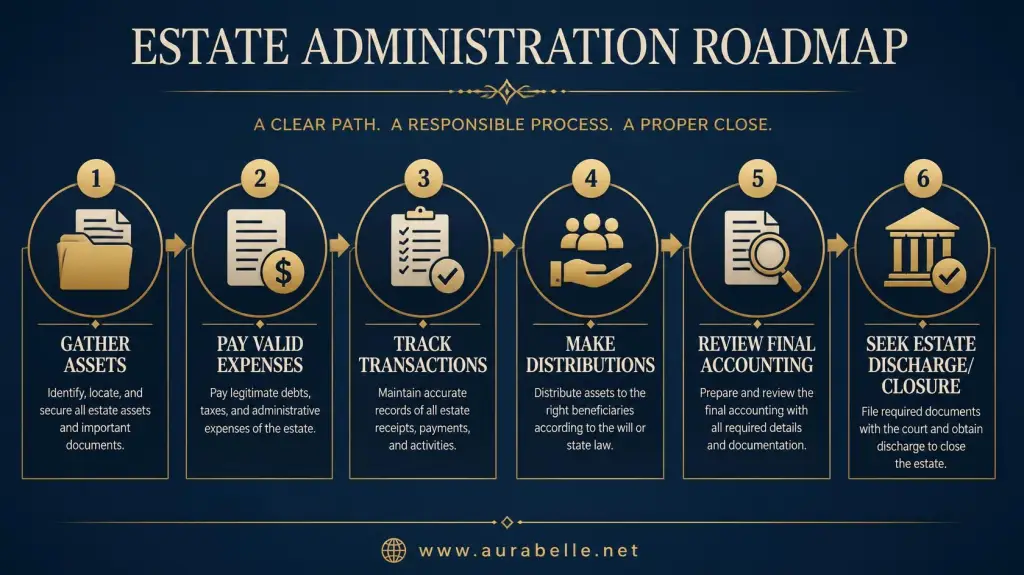
It Supports the Move Toward Discharge
Georgia court materials identify the final return as being due with a petition for discharge or petition for dismissal.
The exact closing procedure depends on the estate and applicable court requirements. However, a family should understand the general sequence: administration is completed, required accounting and reporting are addressed, distributions are handled, and the personal representative seeks the appropriate court relief.
That is why the final estate accounting can be viewed as a bridge between managing the estate and finishing the administration.
When an Accounting May Be Waived
Not every Georgia estate follows exactly the same reporting path. A will, beneficiary or heir waivers, court orders, or other circumstances can affect which reports must be filed or delivered.
That does not mean a personal representative should throw away records. Even when a particular filing or delivery requirement is waived, keeping organized financial documentation can remain extremely important.
The safest approach is to confirm the requirements for the specific estate with the appropriate Georgia Probate Court or a qualified Georgia probate professional.
If your family is unsure whether an estate is actually ready to close, compare the estate’s bank balance, property records, payments, and distributions before assuming the process is complete.
Read our blog How to Close an Estate to understand what must be completed before closing an estate. Learn what claims, assets and debts of the deceased need to be addressed.
A Family Checklist for the Final Estate Accounting
Before moving toward estate settlement and closure, families can organize the information that tells the estate’s financial story. Use this checklist as a starting point, while confirming which items apply to your particular case.
- Gather the latest estate bank statements and transaction records.
- Identify every significant amount received by the estate.
- Organize receipts and records for payments made.
- Review property that was sold, transferred, retained, or distributed.
- Record distributions made to heirs or beneficiaries.
- Identify money or property that remains.
- Check whether outstanding debts or expenses remain.
- Review required tax and reporting matters with the appropriate professional.
- Confirm whether required annual or final returns have been filed.
- Keep copies of court filings, receipts, account statements, deeds, sale documents, and distribution records.
This checklist matters because an accounting is much easier to understand when the supporting records are organized before the final review.
What Families Should Ask Before Closing
Before signing off on the estate’s financial activity, family members may want to ask:
- Does every major deposit have an explanation?
- Does every major payment have supporting documentation?
- Have estate property and sales been accounted for?
- Have required distributions been completed?
- Is there a clear explanation for anything still remaining?
- Are required court reports or returns complete?
- Does the proposed closing paperwork match the actual financial records?
These questions are not meant to create conflict. Instead, they encourage everyone to understand the same information before the estate moves toward completion.
Final Estate Accounting vs. Other Estate Records

The following table can help families distinguish several common records used during estate administration.
| Record | Main Purpose | Simple Family Question |
|---|---|---|
| Estate inventory | Identifies estate property | “What did the estate have?” |
| Estate bank records | Tracks financial activity | “What money came in and went out?” |
| Receipts and payment records | Supports expenses | “What was paid and why?” |
| Distribution records | Documents transfers | “Who received what?” |
| Final estate accounting | Summarizes estate activity | “What happened to the estate financially?” |
| Closing/discharge filing | Requests completion of administration | “Can the representative finish the job?” |
The distinction matters because one document rarely tells the entire story. The final estate accounting works best when it agrees with the supporting records.
If the estate is nearing its final stage, create one closing file with paper, digital, or both and make sure every major number in the accounting can be connected to a supporting document.
Frequently Asked Questions About Final Estate Accounting
What is a final estate accounting?
A final estate accounting is a financial report showing the estate’s activity during administration. It generally addresses money received, expenses paid, property, distributions, and assets remaining, subject to the requirements applicable to the specific estate.
Is a final estate accounting required in every Georgia estate?
Not necessarily. Georgia reporting requirements can be affected by the will, waivers, court orders, and the type of administration. Georgia court materials identify annual and final returns as probate accounting documents, with the final return associated with a petition for discharge or dismissal.
What should an estate accounting include?
A useful estate accounting should make it possible to understand what the estate owned or received, what it paid, what property was sold or transferred, what was distributed, and what remains.
Does property belong in the final accounting?
Property can be an important part of the estate’s financial picture. The accounting should be consistent with the estate inventory, property transactions, transfers, and distributions applicable to the case.
What are remaining assets?
Remaining assets are money or property still held by the estate after the transactions already completed. They need to be identified and addressed before the estate can be considered fully administered.
Can beneficiaries see an estate accounting?
Depending on the estate and applicable Georgia requirements, heirs or beneficiaries may have rights concerning estate reports and accountings. Georgia probate guidance indicates that annual returns can be provided to heirs or beneficiaries unless applicable waiver provisions apply.
What happens after the final accounting?
The next step depends on the estate. Generally, the personal representative addresses remaining obligations and distributions and then uses the applicable Probate Court process to seek discharge or other appropriate closure.
How long does it take to close an estate in Georgia?
There is no single timeline for every estate. Creditor issues, property sales, taxes, disputes, missing beneficiaries, court requirements, and other complications can affect how long Georgia probate takes.
What if money is discovered after the estate closes?
A newly discovered asset can require additional legal and administrative steps. Families should not simply divide newly discovered property without determining whether the estate must be reopened or whether another procedure applies.
Conclusion: Knowing When the Estate Is Truly Near the Finish Line
A final estate accounting is not simply a list of numbers. For a Georgia family, it can provide a clear financial picture of what happened during estate administration.
The basic story is straightforward: money comes into the estate, expenses and valid obligations are paid, property is managed or transferred, distributions are made, and the remaining assets are identified. Once those pieces are properly addressed, the personal representative can determine what additional steps are necessary to move toward closing.
Georgia probate requirements can vary based on the estate’s circumstances. The Georgia Courts provide standard probate forms and resources, while the Council of Probate Judges notes that specific courts handle estate matters and that the Council itself does not provide legal advice.
For that reason, families should not assume that every estate follows the same timeline or requires exactly the same filings.
The most useful rule is simple: keep the financial story complete, understandable, and supported by records. Doing so can make the final stage of estate settlement less confusing and help the family move toward closure with greater confidence.
If you are an executor, administrator, heir, or beneficiary and the estate appears ready to close, review the accounting and remaining assets before taking the final step. When questions remain about Georgia law, court filings, taxes, creditor claims, or distributions, consider obtaining advice from a qualified Georgia probate attorney or the Probate Court handling the case.
Read our blog What Georgia Estate Tax Questions to Ask. Understand income tax, property tax, capital gains tax, inherited property, and federal estate tax rules before assets are sold or distributed.