



Understanding the Final Stage of Estate Settlement
Closing a Georgia Estate is the final stage of a process that can involve gathering property, paying valid expenses and claims, handling taxes and reports, making distributions, and completing required court filings. For families, this stage can feel like the finish line. However, an executor or administrator may still have important duties to complete before being formally discharged.
In Georgia, the person handling the estate is generally called the personal representative. This may be an executor named in a will or an administrator appointed when there is no executor serving under the will. Before the estate can be fully wrapped up, the personal representative generally needs to make sure the estate has been properly administered and that required filings and distributions have been addressed.
Georgia law allows a personal representative who has fully performed the duties of the office to petition the Probate Court for discharge. The discharge petition must address matters such as whether the estate has been fully administered, the known heirs or beneficiaries, unpaid claims, and required inventory and returns.
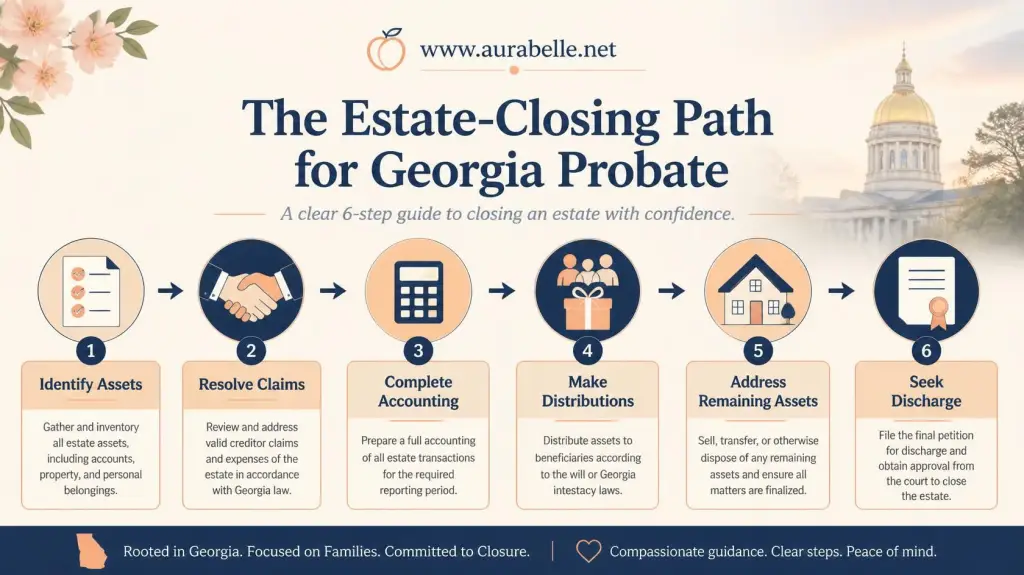
This guide will explain the key steps involved in Closing a Georgia Estate, including the remaining executor duties, administrator responsibilities, final accounting, payment of debts and claims, estate distributions, handling remaining assets, required Probate Court filings, and the process of seeking discharge.
The goal is to help families understand what may need to happen before an estate can officially reach the finish line.
Is Your Georgia Estate Ready to Close?
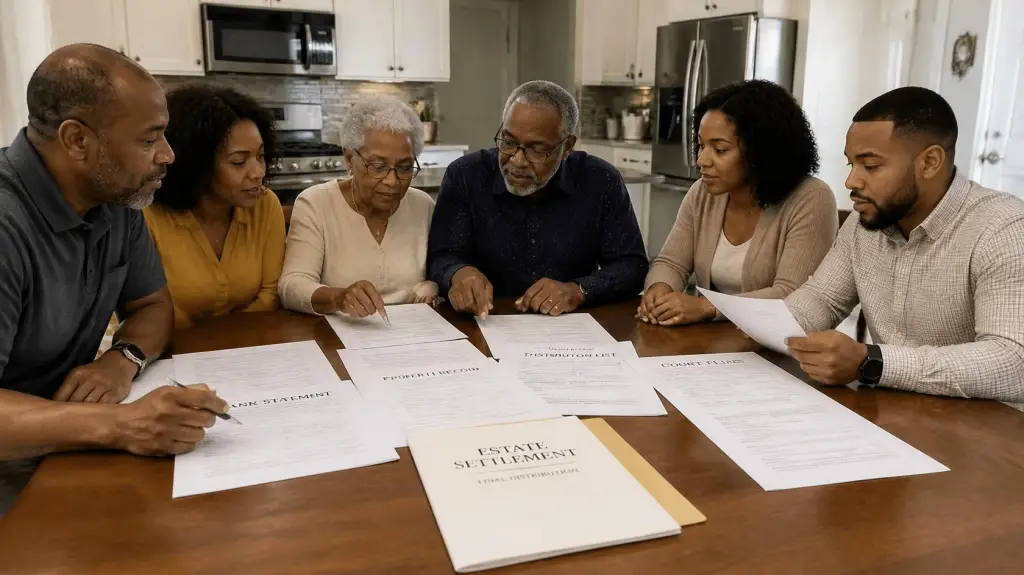
Families often assume an estate is finished once the house is sold, debts are paid, or beneficiaries receive an inheritance. Those events are important, but they do not necessarily mean the court administration is finished.
Closing a Georgia Estate usually requires a final review of the estate’s financial and legal affairs. The personal representative should know what assets came into the estate, what expenses were paid, what claims remain, what property was distributed, and whether anything is still outstanding.
Georgia’s discharge statute says a personal representative seeking discharge must state that the estate has been fully administered and must address claims and required inventory and returns.
If your family believes an estate is almost finished, begin by gathering the most recent bank statements, property records, receipts, distribution records, and Probate Court documents. A complete file makes it easier to identify what still needs attention.
Read our blog How Estate Debts and Expenses are Handled. Learn why keeping good records what the estate owes is necessary before deciding what can safely be distributed.
What Must Be Completed Before Closing a Georgia Estate?
The final stage of Closing a Georgia Estate is easier to understand when families break it into several basic responsibilities. The exact requirements can vary depending on the will, court orders, waivers, the type of administration, creditor issues, and other facts.
Review All Estate Assets
The personal representative should make sure the estate’s property has been identified and properly handled.
Estate assets might include:
- Bank accounts.
- Investment accounts.
- Real estate.
- Vehicles.
- Personal belongings.
- Business interests.
- Refunds or money owed to the deceased.
- Other property belonging to the estate.
This review matters because an estate should not be treated as finished while significant property is still unexplained or unadministered.
Resolve Debts and Creditor Claims
An estate may have bills and creditor claims that need to be addressed before final distribution. These could include medical bills, funeral expenses, mortgages, credit accounts, taxes, property expenses, or other valid obligations.
The personal representative should keep documentation showing which claims were paid, disputed, settled, or otherwise addressed.
This is especially important because Georgia’s discharge statute requires the petition to state that claims have been paid or identify claims that remain unpaid and explain why.
Complete the Final Accounting
A final accounting provides a financial picture of the estate’s administration. It helps show what came into the estate, what went out, what was distributed, and what remains.
Depending on the estate, records supporting the accounting may include:
- Estate bank statements.
- Deposit records.
- Receipts.
- Bills and invoices.
- Property sale documents.
- Investment statements.
- Distribution receipts.
- Tax-related records.
- Court filings.
The goal is not simply to produce numbers. The goal is to make the estate’s financial activity understandable and supportable.
Make Estate Distributions
After the estate’s obligations have been addressed, property can generally be distributed according to the will or applicable Georgia law.
Distributions might involve money, real estate, vehicles, personal property, investments, or other assets. The personal representative should maintain documentation showing what was distributed and to whom.
A signed receipt or other appropriate record can be useful because it creates evidence that a distribution was completed.
Identify Remaining Assets
One of the most important questions before Closing a Georgia Estate is simple: “What is left?”
If money remains in an estate account, the personal representative should determine why it remains. If property has not been distributed, the representative should determine whether additional action is needed.
Remaining assets might represent:
- A final expense that has not yet cleared.
- Money reserved for a known obligation.
- A pending property transaction.
- A final distribution that has not yet been completed.
- An asset requiring additional documentation.
- Money that needs to be distributed under the will or applicable law.
The answer should be clear before the personal representative asks the court for discharge.
Before filing final paperwork, compare the estate bank balance with the accounting and distribution records. If the numbers do not match, stop and investigate the difference before treating the estate as complete.
Read our blog What is Georgia Probate Inventory. Learn how to keep supporting records and why an accurate inventory gives family members a clearer understanding of the estate.
Why Proper Estate Closing Matters to Families
Closing a Georgia Estate is more than checking a final box. It can provide clarity for beneficiaries and help the personal representative demonstrate that the estate was handled responsibly.
It Creates a Clear Financial Record
A well-organized final accounting can answer common family questions.
Where did the money come from? What was paid? What property was sold? Who received distributions? Why is money still in the estate account?
Instead of relying on memory, the family can rely on documents.
That can be especially valuable when several family members are involved or when the estate takes a long time to administer.
It Helps Prevent Last-Minute Problems
A final review may uncover an unresolved issue before the estate is closed.
For example, the personal representative might discover that a beneficiary has not received a distribution, an account still needs to be transferred, or an expense has not been paid.
Finding these issues early is helpful because correcting them after discharge may require additional legal steps.
It Prepares the Personal Representative for Discharge
Georgia law provides a process for a personal representative to petition the Probate Court for discharge after fully performing the duties of the office. The petition must address administration of the estate, heirs or beneficiaries, claims, and required inventory and returns.
The official Georgia Probate Court form, GPCSF 33, is titled “Petition for Discharge of Personal Representative” and identifies executors, administrators, and temporary administrators as possible petitioners.
The important point for families is that discharge is a legal step, not simply an announcement that the family is finished dividing property.
What Does Discharge Mean?
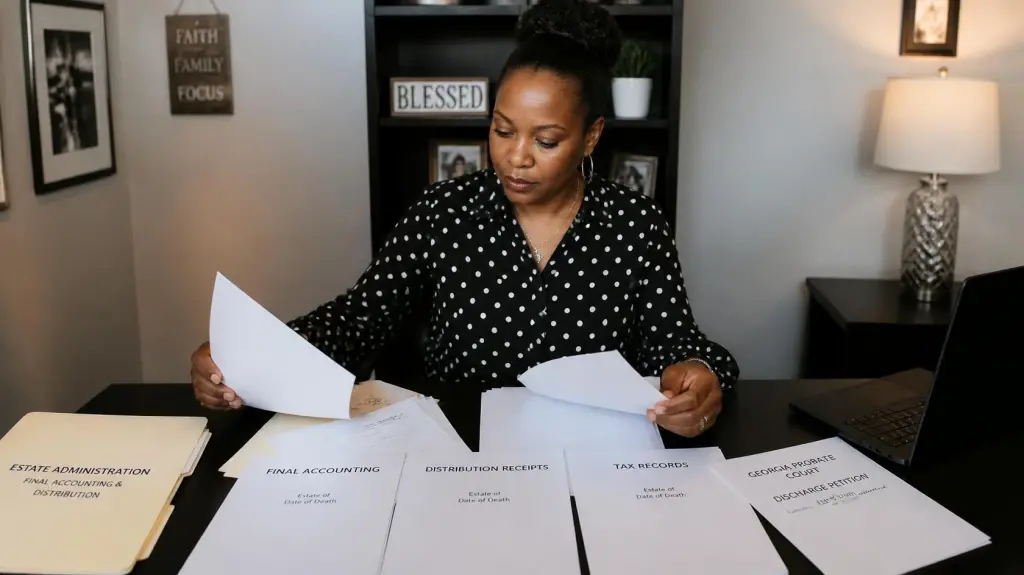
A discharge can formally release the personal representative from the office and, when the appropriate relief is granted, from liability associated with administration.
Georgia law also addresses what can happen if additional estate property is discovered after discharge. The statute allows the Probate Court, upon petition by an interested person, to appoint the same or a successor personal representative to administer subsequently discovered estate property.
Therefore, families should keep estate records even after the estate has been closed.
If you are the executor or administrator, create a final review folder and make sure every major asset, expense, distribution, and remaining balance can be explained before seeking discharge.
Read our blog What are the First Steps of Executor. Learn the responsibilities involved for an executor of an estate and how to build a inventory for accounting, managing and organizing the estate assets.
A Family Checklist for Closing a Georgia Estate
When an estate appears ready to close, a written review can help the family and personal representative identify unfinished work. Use the following as an educational starting point rather than a substitute for advice about a particular estate.
- Review all known estate assets.
- Compare current assets with the original inventory or other estate records.
- Reconcile estate bank accounts.
- Document income received during administration.
- Organize receipts and records for expenses.
- Resolve or document creditor claims.
- Review tax and reporting obligations with the appropriate professional.
- Complete required accountings or returns.
- Confirm beneficiary information.
- Complete authorized estate distributions.
- Obtain appropriate documentation of distributions.
- Identify any remaining money or property.
- Review required Probate Court filings.
- Determine whether the personal representative can petition for discharge.
- Keep copies of the closing documents.
The reason for this checklist is simple: an estate is easier to close when the personal representative can tell a complete story from beginning to end.
Questions to Ask Before Filing for Discharge
Families can also use a short question-and-answer review before the final filing. This does not replace legal review, but it can highlight areas that deserve attention.
Ask whether every significant estate asset has been identified. Then ask whether the estate’s bills and claims have been properly addressed.
Next, review whether distributions match the will or applicable law. After that, check whether any property or money remains unexplained.
Finally, confirm which reports, returns, notices, and court filings apply to the estate.
Georgia’s discharge law specifically requires the petition to address whether claims have been paid or identify unpaid claims, as well as whether necessary inventory and returns have been filed or the representative has been relieved from those filings.
Executor vs. Administrator: Who Closes the Estate?

Both an executor and an administrator can serve as a personal representative, but their appointment may arise in different circumstances.
| Role | General Description | Closing Responsibility |
|---|---|---|
| Executor | Usually appointed under a will | Completes required administration and seeks appropriate discharge |
| Administrator | Appointed by the Probate Court when applicable | Completes administration and seeks appropriate discharge |
| Temporary administrator | Serves under limited circumstances and authority | Completes duties required by the appointment and applicable court order |
The important family question is not simply what title the person has. Instead, ask whether the personal representative has completed the duties required for that particular estate.
If your estate is approaching its final stage, review the accounting, distributions, claims, remaining assets, and required court filings together. When something is unclear, address it before asking the Probate Court for discharge.
Read our blog What is Final Accounting on keeping an organized journal what happened financially to the estate. Track and record what expenses have been paid and assets received and distributed to beneficiaries and heirs.
Frequently Asked Questions About Closing a Georgia Estate
How do you close an estate in Georgia?
Generally, the personal representative completes the required administration, addresses debts and claims, handles required accounting and reporting, makes appropriate distributions, addresses remaining assets, and then uses the applicable Probate Court process to seek discharge.
Georgia’s discharge statute allows a personal representative who has fully performed the duties of the office to petition for discharge.
Does an executor have to file a final accounting in Georgia?
The answer can depend on the estate’s circumstances, including the will, waivers, court orders, and applicable reporting requirements. Georgia law specifically addresses inventory and returns in the discharge process and permits the petition to state that required filings were completed or that the representative was relieved from them.
What happens before an executor is discharged?
Before discharge, the personal representative generally needs to ensure that the estate has been properly administered. That can include resolving claims, completing required reports, handling distributions, and addressing remaining property.
Can an estate be closed if money remains?
Money may remain temporarily for a legitimate reason, but the personal representative should be able to explain why it remains and determine what action is required. An unexplained balance should not simply be ignored.
What happens if property is discovered after an estate closes?
Georgia law provides a process for subsequently discovered estate property. Upon petition by an interested person, the Probate Court may appoint the same or a successor personal representative to administer the newly discovered property.
How long does it take to close a Georgia estate?
There is no single timeline for every estate. Straightforward estates may move through administration more quickly, while real estate, creditor claims, tax matters, disputes, missing beneficiaries, or other complications can extend the process.
What is a personal representative in Georgia?
A personal representative is the person legally responsible for administering a decedent’s estate. Depending on the circumstances, that person may be an executor, administrator, or temporary administrator. Georgia’s official discharge form specifically identifies these roles in its petition for discharge.
Does closing the estate end the executor's responsibilities?
A formal discharge can provide important legal protection and release from the office and applicable liability, but families should retain estate records. Georgia law also provides for administration of subsequently discovered estate property after discharge.
Conclusion: Reaching the Finish Line in Georgia Probate
Closing a Georgia Estate can bring relief to a family, but the final stage deserves careful attention. The personal representative may need to complete remaining duties, resolve claims, prepare accounting information, make distributions, address remaining assets, and complete required reporting before seeking discharge.
The final review should answer five basic questions:
- What did the estate own?
- What money came into the estate?
- What expenses and claims were paid or otherwise resolved?
- What was distributed?
- What remains, and why?
Those questions help turn a complicated probate file into a clear financial story.
Georgia law provides a formal discharge process for a personal representative who has fully performed the duties of the office. The discharge petition addresses the administration of the estate, heirs or beneficiaries, claims, and required inventory and returns.
However, every estate is different. A will may contain special instructions. Beneficiaries may have different rights. The estate may have unresolved creditor issues, real estate, tax questions, disputes, or assets that require additional work.
For that reason, families should not assume that selling property or distributing money automatically means the estate is closed.
Instead, think of Closing a Georgia Estate as a final quality-control process. Review the records, confirm the numbers, complete the required duties, document distributions, address remaining assets, and then determine whether the personal representative is ready to seek formal discharge.
When the final paperwork is complete and the Probate Court enters the appropriate order, the family can move forward knowing that the estate administration has reached its legal conclusion.