



Why Property Value Matters During Probate

When a loved one dies and leaves a home or other real estate, one of the first questions families often ask is, “What is the property worth?” A real estate appraisal for probate can help answer that question with a documented opinion of value. In other situations, a market evaluation may provide a useful starting point when the family is deciding whether to sell, keep, or distribute the property.
Property value matters because a house may represent a large part of an estate. The value can affect how beneficiaries divide assets, how the personal representative evaluates the estate, and how a future sale is handled. It can also matter for tax purposes. The IRS generally uses fair market value at the date of death when determining the basis of inherited property, subject to certain rules and exceptions.
For Georgia families, however, today’s market price is not always the same as the property’s value on the date the owner died. Real estate markets change. Homes are renovated. Neighborhood conditions shift. Interest rates move. Therefore, the purpose and effective date of the valuation are important.
This guide explains how a probate property valuation works, when a market evaluation may be enough for planning, and when a formal appraisal may provide stronger support.
Why Probate Property Valuation Should Not Be a Guess
Imagine a family home that everyone remembers as being worth about $400,000. One beneficiary believes it is worth $475,000 because of recent improvements. Another thinks it is worth only $350,000 because the house needs repairs.
Without reliable information, the family can quickly disagree.
A reasonable real estate valuation gives everyone a common starting point. Instead of relying on memory, online estimates, or personal opinions, the family can look at actual market evidence and the property’s characteristics.
A professional valuation can consider factors such as:
- The property’s location.
- Size and layout.
- Lot size.
- Age and condition.
- Recent renovations.
- Comparable sales.
- Current market conditions.
- Special features.
- Required repairs.
- Zoning or other property characteristics.
These factors matter because two homes on the same street may have very different values.
Why Families Should Establish Value Early
An early estate property appraisal or market evaluation can give the personal representative and beneficiaries a clearer picture of the estate.
For example, suppose a house is estimated at $500,000 and the estate has other assets worth $200,000. That is a very different situation from a house valued at $300,000 with the same $200,000 in other assets.
The value can help the family understand the overall estate before making major decisions.
If your family is beginning probate, gather the deed, property-tax records, mortgage information, renovation records, and any previous appraisal before deciding what the property is worth.
Read our blog What is Georgia Probate Inventory how to start collecting information about the estate. Learn how to organize, collect estate assets and why keeping a record can help prevent confusion, family disputes, and liabilities.
How a Real Estate Appraisal for Probate Works
A real estate appraisal for probate is designed to develop an opinion of a property’s value for a particular purpose and effective date.
The process is more than simply looking at what nearby houses are selling for.
Start With the Purpose of the Valuation
The first question should be: Why does the family need the value?
A property may need to be valued for:
- General estate planning and settlement.
- Division among heirs.
- A proposed sale.
- A beneficiary buyout.
- Tax reporting.
- Establishing a date-of-death value.
- Supporting legal or financial decisions.
The purpose can influence the type of valuation that is appropriate.
For example, a family deciding whether to list a home for sale may benefit from a current market evaluation. On the other hand, a tax professional may need a documented value tied to a specific historical date.
Understand the Effective Date
One of the most important concepts in probate valuation is the effective date.
A property’s value today may be different from its value on the date the owner died.
The IRS generally defines fair market value for estate purposes using the value at the decedent’s date of death. The federal estate-tax rules also provide an alternate valuation method in certain circumstances when the executor makes the required election.
This is why a date of death appraisal may be appropriate when a family needs to reconstruct what the property was worth at an earlier point in time.
A home could have been worth $450,000 at death and $525,000 two years later. Using today’s $525,000 figure simply because it is easier to find may not answer the question the estate actually needs to answer.
What a Market Evaluation Can Tell You
A market evaluation can be useful when the family wants a practical understanding of current market conditions.
It may look at recent sales of similar homes and consider how the subject property compares.
For example, a real estate professional may examine:
- Recent sales in the neighborhood.
- Similar square footage.
- Number of bedrooms and bathrooms.
- Lot size.
- Property condition.
- Updates and renovations.
- Location within the neighborhood.
- Features such as garages, basements, pools, or views.
The result can help the family understand a reasonable potential selling range.
However, a market evaluation and a formal appraisal are not necessarily interchangeable.
When a Formal Appraisal May Be Appropriate
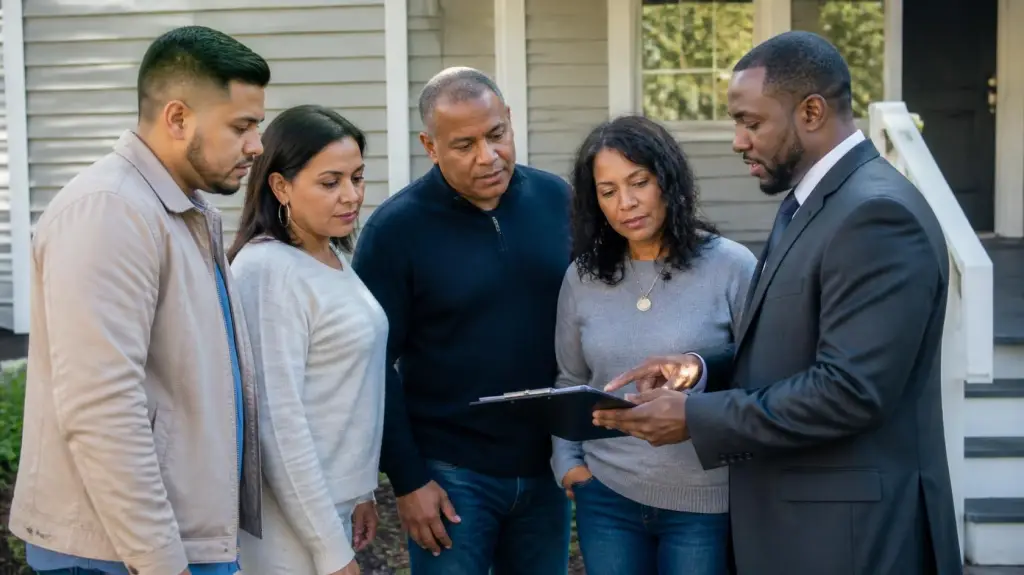
A property appraisal may be more appropriate when the family needs a formal, independent opinion of value.
That can be particularly useful when:
- Beneficiaries disagree about the home’s value.
- The property is being divided among heirs.
- A beneficiary wants to buy another beneficiary’s interest.
- A historical date-of-death value is needed.
- The property is unusual or difficult to compare.
- Tax reporting requires supporting documentation.
- Attorneys or financial professionals recommend a formal appraisal.
The IRS instructions for Form 706 specifically contemplate reporting real estate at value and explaining how reported values were determined, including attaching copies of appraisals when applicable.
If you are unsure whether your estate needs a market evaluation or formal appraisal, ask the probate attorney, CPA, or other professional handling the estate what purpose the valuation must serve before ordering the report.
Read our blog Who Should Be on Your Estate Team to learn when a hiring professionals is helpful for evaluating financial and property assets and how to choose the right professional that can review and answer questions about the deceased estate.
Market Evaluation vs. Formal Appraisal
Families often use the terms “valuation,” “market analysis,” and “appraisal” as though they mean the same thing. They do not always serve the same purpose.
The following comparison can help.
| Valuation approach | Main purpose | Best use | Documentation level |
|---|---|---|---|
| Market evaluation | Estimate current market position | Planning a possible sale | Generally less formal |
| Comparative market analysis | Compare property with recent sales | Pricing and sale discussions | Market-focused |
| Formal appraisal | Develop an independent opinion of value | Estate, legal, tax, or other formal purposes | More detailed |
| Date-of-death appraisal | Determine value as of a historical date | Estate and tax-related needs | Historical and documented |
A market evaluation may be useful for a family meeting. A formal appraisal may be more appropriate when the value needs to withstand scrutiny.
Why Comparable Sales Matter
Comparable sales, often called “comps,” are an important part of residential real estate valuation.
A good comparison is not simply the closest house that sold recently.
The property may need to be compared based on:
- Location.
- Size.
- Condition.
- Age.
- Lot characteristics.
- Improvements.
- Sale date.
- Market conditions.
An appraiser considers these differences when developing an opinion of value.
The goal is not to find an identical house. Instead, the goal is to find useful market evidence and make appropriate adjustments.
Why Online Home Values May Not Be Enough
Online home-value tools can be convenient. They may give a family a quick starting point, but they should not automatically be treated as the final answer for an estate.
An automated estimate may not fully account for the home’s current condition, unusual features, interior improvements, deferred maintenance, or the specific valuation date.
Therefore, a family should be careful about using a single online number to settle a disagreement among beneficiaries.
A quick estimate can start a conversation. It may not finish one.
How an Appraisal Can Help With Fair Distribution
Suppose a parent leaves a home to three children.
The siblings want to divide the estate fairly. One sibling wants the house, while the other two prefer cash.
The question becomes: What value should be assigned to the home?
If everyone agrees that the house is worth $450,000, the family has a much clearer starting point for discussing the distribution.
If the house is assigned an unsupported value of $300,000, however, the other beneficiaries could potentially receive less than their fair share.
This does not mean an appraisal automatically determines how an estate must be divided. Rather, it provides objective valuation information that can help the family and professionals make informed decisions.
Date-of-Death Value Can Affect Future Tax Basis
Valuation can also have consequences after probate.
The IRS generally states that inherited property receives a basis equal to its fair market value on the decedent’s date of death, or an alternate valuation date when that method is properly elected.
For example, imagine a house has a properly established date-of-death value of $400,000. If it is later sold for $430,000, the tax consequences can differ from a situation in which the property’s basis was incorrectly recorded at a much lower amount.
The exact tax result depends on the property’s history, improvements, selling expenses, applicable tax rules, and the individual’s circumstances. Therefore, families should consult a qualified tax professional for tax calculations.
A Practical Probate Property Valuation Checklist
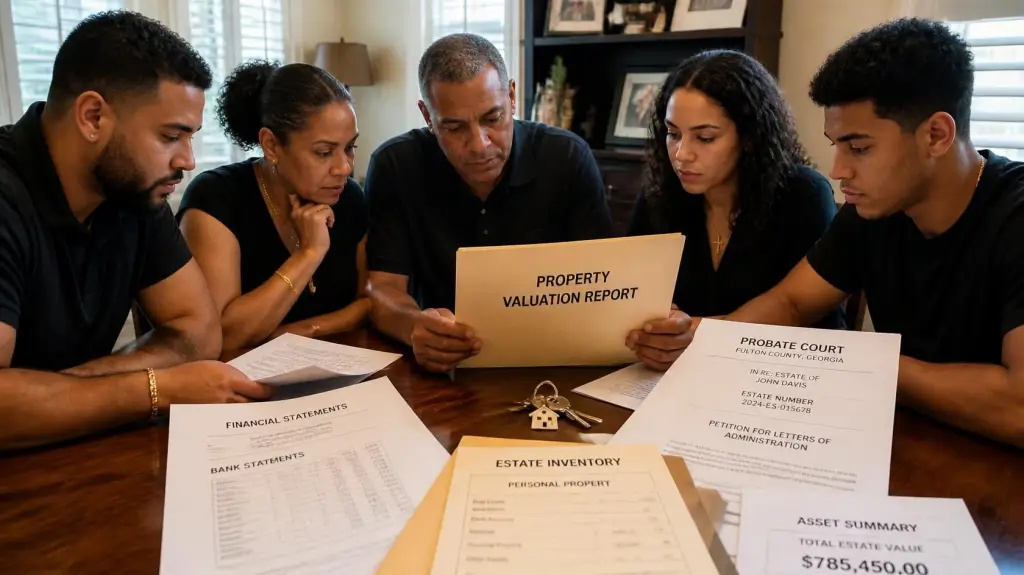
Once the family knows why the property needs to be valued, the next step is organizing the information.
Before meeting with an appraiser, attorney, real estate professional, or tax adviser, gather:
- The current deed or property records.
- The owner’s date of death.
- The will or trust documents, when applicable.
- Recent property-tax records.
- Mortgage information.
- Records of major improvements.
- Previous appraisals.
- Insurance information.
- Information about known liens.
- Photos showing the property’s condition around the relevant valuation date.
- Records showing unusual property features or restrictions.
This information matters because the more complete the property’s history is, the easier it can be to understand why a particular value was reached.
Decide Whether You Need Current or Historical Value
This is one of the most important decisions.
If the family is considering selling the house now, current market information may be useful.
If the family needs to know what the house was worth when the owner died, a date of death appraisal may be appropriate.
Those are two different questions.
The correct valuation date should be identified before the valuation work begins.
Document the Property’s Condition
Condition can make a major difference in value.
A home that needed a new roof, had outdated systems, or required significant repairs at the relevant date may not have had the same value as a renovated home down the street.
Families should preserve photographs and records that help demonstrate the property’s condition.
This can be especially helpful when a valuation must be performed after the property has already been repaired or sold.
Keep the Valuation With the Estate Records
Once the family receives a probate property valuation or appraisal, keep it with the estate’s permanent records.
The report may become useful later when:
- The house is sold.
- Beneficiaries question the value.
- A tax professional prepares a return.
- The estate distributes property.
- A beneficiary sells inherited property.
- The family needs to explain how the estate reached a particular value.
The IRS notes that inherited-property basis documentation can be important when the property is eventually sold.
If your family is preparing to distribute or sell real estate, have the valuation question answered before the transaction is finalized. A properly documented value can give the personal representative and beneficiaries a clearer foundation for the next step.
Read our article How to Prepare an Estate Property for Sale. Learn careful planning that can help protect the estate property, control property expenses, preserve important documents, and give the executor or administrator better information for making decisions.
Frequently Asked Questions About Real Estate Appraisal for Probate
Is a real estate appraisal required for probate in Georgia?
Not every probate situation automatically requires a formal appraisal. The need depends on the estate, the property, the purpose of the valuation, applicable court requirements, and tax or legal circumstances. A formal real estate appraisal for probate can nevertheless be useful when the estate needs documented support for value.
What is the difference between a market evaluation and an appraisal?
A market evaluation generally provides a practical estimate based on current market information. A formal appraisal is an independent professional opinion of value prepared for a defined purpose and effective date.
For estate matters, the distinction is important because the family may need a historical value rather than today’s market estimate.
What is a date of death appraisal?
A date of death appraisal determines the property’s value as of the date the owner died. This can be important because the IRS generally uses fair market value at death when establishing the basis of inherited property, subject to applicable exceptions.
Can a real estate agent provide a probate valuation?
A real estate professional may provide a market evaluation or comparative market analysis. Whether that is sufficient depends on why the estate needs the valuation. If a formal, independent opinion is appropriate, the family may need a qualified appraiser instead.
Can an online estimate be used for an estate?
An online estimate can be a useful starting point for understanding a property. However, it may not account for the property’s condition, unique characteristics, historical market conditions, or the specific effective date required for an estate matter.
Why does fair market value matter?
Fair market value provides a standard for understanding what property may reasonably have been worth under market conditions. The IRS defines fair market value using a willing-buyer and willing-seller concept rather than a forced-sale price.
What if the heirs disagree about the property value?
A disagreement is a good reason to consider independent valuation evidence. A formal estate property appraisal can give beneficiaries a common, professionally supported figure to discuss rather than relying on personal opinions.
Can the property value change after the owner’s death?
Yes. Real estate values can rise or fall after death. That is why the valuation date matters. A property’s current market value may be different from its date-of-death value.
Should an appraisal be completed before selling inherited property?
It can be helpful, particularly when the estate needs to document the property’s value, establish a basis, divide assets among beneficiaries, or determine an appropriate sales strategy. The right timing should be discussed with the professionals handling the estate.
Final Thoughts: Use Property Value to Bring Clarity to Probate
Real estate can be one of the most valuable assets in a Georgia estate. It can also be one of the easiest assets for families to disagree about.
A reasonable probate property valuation gives everyone a better foundation for understanding the estate. In simpler situations, a market evaluation may help the family make an initial decision about pricing or whether to sell. In more formal situations, a real estate appraisal for probate may provide the independent documentation needed for estate administration, beneficiary discussions, tax matters, or other purposes.
The key is to identify the question before choosing the valuation method.
Are you trying to determine today’s likely selling price? A market evaluation may be useful.
Are you trying to determine the property’s value on the owner’s date of death? A date of death appraisal may be more appropriate.
Are beneficiaries disagreeing about the property’s value? An independent appraisal may provide a stronger basis for discussion.
Are tax or legal professionals requesting documented value? Ask them what type of valuation and effective date they require.
Ultimately, the goal is not simply to put a number on a house. The goal is to give the family a reasonable, well-supported understanding of the property’s value so the estate can move toward a fair and informed settlement.